
Customer Service Best Practices: Provide Excellent Customer Experience Delivering excellent customer service is no longer a differentiator; it is a baseline expectation that defines the…

Selecting online accounting tools for startups requires assessing core features such as invoicing, expense tracking, and bank reconciliation, alongside scalability for multi-currency, multi-entity structures, and role-based access. Evaluate integrations with payments, payroll, CRM, and e-commerce. Prioritize security, data privacy, audit trails, and compliance. Effective implementation includes chart of accounts design, data migration, workflow automation, and structured onboarding.

Business Planning: How to Set Goals, Build Strategy, and Drive Growth Establishing clear and achievable goals is a foundational element of effective business planning. Goals…
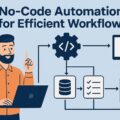
This article explores how no-code platforms empower organizations to streamline workflows without extensive programming, driving significant improvements in scalability and cost efficiency. It analyzes the democratization of technology, real-world operational applications, and strategic governance. Furthermore, it discusses the convergence of artificial intelligence with automation to offer a roadmap for sustainable digital transformation.

Small business cybersecurity basics start with knowing what you must protect: critical data, systems, and processes, and assessing threats, vulnerabilities, and acceptable risk. Strengthen identity controls with strong passwords or passkeys, multi-factor authentication, least privilege, and secure remote access. Protect devices, networks, and data through patching, endpoint security, hardened Wi‑Fi, firewalls, backups, and encryption, supported by policies, training, and an incident response plan.

How to Prepare for a Microsoft Licensing Audit: SMB Checklist and Action Plan Quick checklist — what this article will deliver: – Define the audit…

To understand how to choose a business name, begin with a clear brand strategy: mission, values, audience, and personality. Apply naming criteria that support growth, ensuring scalability, clarity, and memorability while avoiding restrictive trends. Validate options through competitive research, domain and social handle checks, trademark screening, and cultural review. Finalize by scoring finalists, testing with stakeholders, and preparing registration and brand assets.

Leadership development for entrepreneurs is the disciplined practice of shaping vision, aligning stakeholders, and leading ethically under pressure. It begins with self-awareness and values-driven decision-making, then advances through clear communication, negotiation, and constructive feedback. As companies grow, effective leaders build accountable teams, delegate with rigor, foster psychological safety, and develop successors using measurable leadership metrics and continuous improvement.

Entrepreneurs benefit from structured systems that reduce friction across planning, execution, and operations. Top productivity tools for entrepreneurs include task and project management platforms for breakdowns, prioritization, and recurring workflows; communication suites for chat, meetings, and documentation; time and focus tools for scheduling, tracking, and deep work; and operational software for CRM, accounting, e-signatures, storage, and standardized processes.

Economic downturns can devastate unprepared businesses—but they also create opportunity for those positioned correctly. The key is identifying recession-proof business ideas that continue generating demand…
