You’ve Come To The Right Place To Learn About Photography
Learn About Photography: Photography is widely recognized as both an expressive art form and a powerful mode of universal communication. While producing high-quality imagery requires a synthesis of technical knowledge and creative skill, every photographer begins their journey with the basics. This guide serves as a comprehensive resource to assist you in navigating the complexities of exposure, composition, and gear, providing a solid foundation for your photographic development.
Essential Equipment and Preparation
TIP! An advanced camera system is highly recommended for those pursuing serious photography. While the traditional dSLR (Digital Single-Lens Reflex) has been the standard, modern Mirrorless cameras also offer full manual control and interchangeable lenses. These systems provide the best method for visualizing exposure and depth of field immediately.
Regardless of the camera you choose, you must be ready at all times to capture fleeting moments. Modern digital cameras, particularly those with electronic viewfinders and large LCD screens, are power-hungry. To mitigate this, consider turning off the automatic image review feature to conserve energy. Always keep your batteries charged; make sure they are fully charged before a shoot, and invest in a battery grip or carry multiple spare sets. You will never miss a critical shot due to power failure this way.
Learn About Photography: Mastering Technical Settings
To gain control over your images, you must figure out the best blend of the “Exposure Triangle”: aperture, ISO, and shutter speed. Your photo’s exposure is dictated by these three interacting settings. Aperture controls depth of field, ISO controls the sensor’s sensitivity to light (and potential noise), and shutter speed controls motion. See what kind of creative combinations you can come up with by balancing these three features to avoid unintentional overexposure (blown-out whites) or underexposure (crushed blacks).
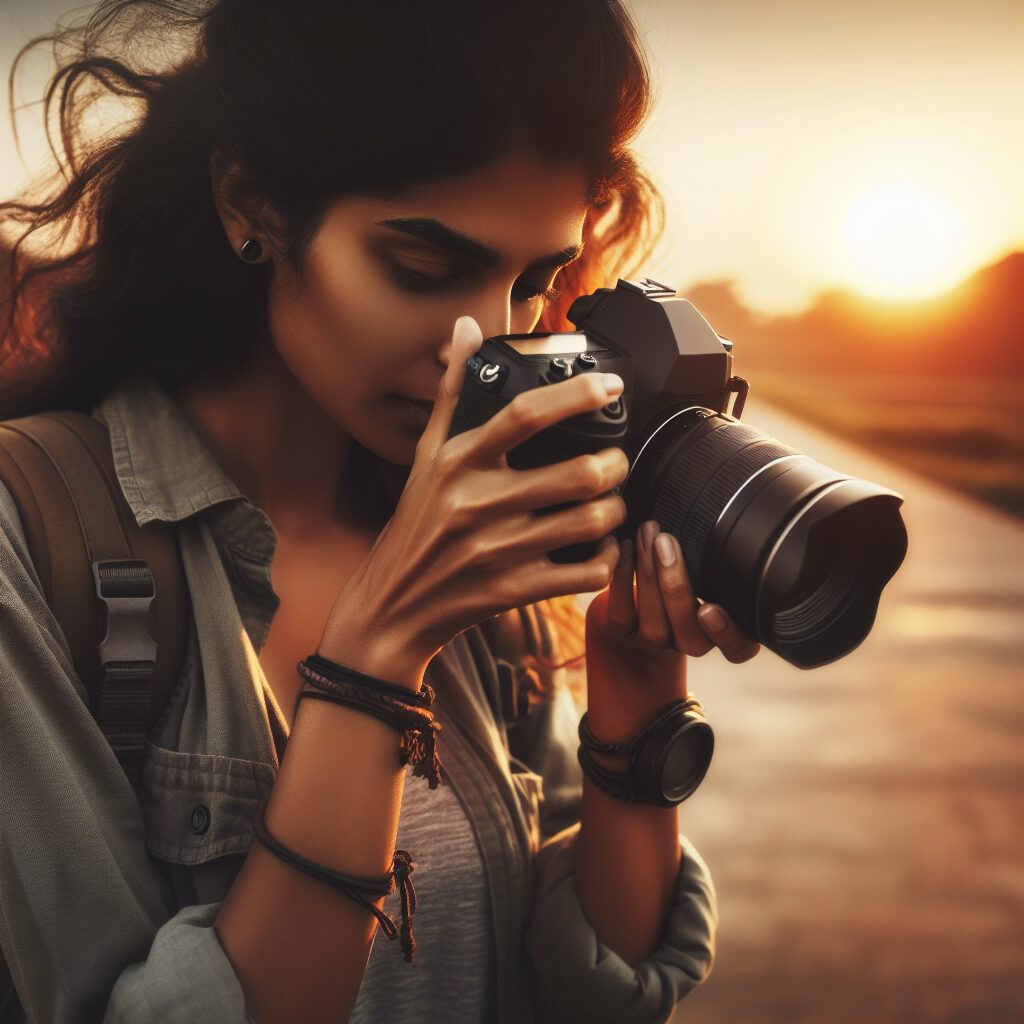
TIP! Do not make your camera settings too complicated, especially when starting out. Do not attempt to master every customizable function at once. Instead, master one priority mode, such as Aperture Priority, before moving on to full Manual mode.
Once you understand the basics, focus on mastering shutter speed. This requires experimentation to understand how it influences the final aesthetic of an image. With developed skills, you can freeze fast-paced action, create a sense of motion through blurring, or bring specific features into sharp focus while softening the background. “Fast” shutter speeds (such as 1/1000th of a second) are essential for sports and wildlife photography where the goal is to eliminate blur. Conversely, slow shutter speeds (like 1/15th of a second or longer) are ideal for landscapes, allowing photographers to create a silky effect on moving water or capture the trails of car lights at night.
TIP! Tinker with your camera’s manual white balance rather than relying on “Auto.” When you are taking shots indoors, you can often get an unnatural yellow or orange tint due to incandescent light bulbs. Adjusting the Kelvin temperature or selecting the “Tungsten” preset will correct these colors to appear natural.
Lighting and Exposure Strategies
Lighting is the essence of photography. A very sunny day may seem perfect for photographs, but taking a picture in direct, overhead sunlight often results in harsh, unflattering contrast. You have to deal with deep shadows, overblown highlights, and subjects who are squinting. It is always wise to shoot during the “Golden Hour”—shortly after sunrise or just before sunset—when the light is softer, warmer, and more diffuse, resulting in superior outdoor portraits and landscapes.
TIP! Many people assume bright sun makes for great photographic conditions. However, direct sunlight often ruins would-be great shots by creating “raccoon eyes” (shadows in eye sockets). If you must shoot at noon, try to move your subject into open shade or use a reflector to bounce light back into the shadows.
You should always have a plan regarding dynamic range and whether you want to prioritize highlights or shadows. However, in high-contrast situations, you can utilize “bracketing.” This involves taking two or more pictures of the subject at different exposures (one for the sky, one for the land) and using software such as Photoshop or Lightroom to blend them. This technique, known as High Dynamic Range (HDR) photography, results in one perfectly balanced photograph.
Composition and Perspective
Learn About Photography: Experiment with taking pictures from different angles to see how it changes the visual interest of your photograph. While centering a subject is standard, it can often feel static or boring. Adhering to the “Rule of Thirds”—placing your subject along the grid lines roughly one-third of the way into the frame—creates a more balanced and visually engaging composition.
It is important to experiment with perspective; the subject does not need to be static or centralized. Try getting shots of the subject from dynamic angles, such as shooting from a bird’s-eye view (above) to minimize the subject, or a worm’s-eye view (below) to make them look powerful and imposing. Changing your physical position relative to the subject can completely alter the emotional weight of the image.
Try to get as close as you can to your photo subject to increase impact. If you are too far away, the subject may become lost in a chaotic environment. By physically moving closer or using a longer focal length, you afford your viewers a clear, detailed view of the subject’s expressions or textures. As the famous photographer Robert Capa once said, “If your pictures aren’t good enough, you aren’t close enough.”
Framing is paramount when composing your shot. If a background object, such as a trash can or a passerby, distracts from the subject, you must remove it from the composition. Zooming in with a telephoto lens is an effective way to isolate your subject. This technique compresses the background and ensures your photo remains clutter-free, directing the viewer’s eye exactly where you want it.
When you are taking photos, remember that sometimes less is more. Avoid cluttering the composition of your shots with unnecessary elements that compete for attention. Utilizing “negative space”—the empty area around a subject—can emphasize the main focal point. Keeping things simple in your photos is what catches your viewer’s attention; simplicity often creates the strongest visual impact.
TIP! Don’t neglect the foreground of a photo in favor of the background when taking a landscape shot, as the foreground provides scale and depth. Compose the frame to include interesting elements like rocks or flowers in the front to lead the eye into the scene, making the foreground as important as the majestic background.
Don’t forget the “little things” you see when traveling; small details often make for amazing photographs. Texture shots of cobblestone streets, local food markets, or architectural ornaments might not seem groundbreaking in the moment, but combined, they create a narrative. When you return home, these detailed macro shots will frame your memory of the trip in new, textural ways. Whether it is a unique street sign or a handwritten menu, every picture contributes to the story of the location.
Regarding human subjects, most photographers instinctively ask them to look into the camera. However, for a more candid or cinematic look, have the subject look away from the lens. This can imply that they are in deep thought or observing something interesting out of view. You could also have them look at something specific within the frame, such as another person or an object, to create a connection between elements.
Photographs of nature require special care and ethical consideration. To capture pictures of moving animals, you must use a fast shutter speed and often a continuous shooting mode (burst mode). Furthermore, follow the “Leave No Trace” philosophy. When you come upon a beautiful, pristine natural spot, ensure you leave it exactly as you found it so other photographers and nature enthusiasts can enjoy it. Disturbing wildlife or destroying flora for a shot is never acceptable.
Learn About Photography: Post-Processing and Curation
Beyond the mechanics of the camera, modern photography relies heavily on the “digital darkroom.” Implementing digital post-processing techniques can significantly enhance the visual impact of your work and correct minor errors made during the shoot. There is a vast array of editing software available, with Adobe Photoshop and Adobe Lightroom remaining the industry standards for professionals due to their robust capabilities. However, accessible alternatives such as GIMP or darktable offer powerful tools for those just beginning to explore image manipulation without the financial commitment of a subscription.
While professional software suites often possess a steep learning curve, mastering their fundamental features is essential for converting standard photographs into art-like quality. One specific area of interest for beginners is the use of filters and presets. These functions allow you to apply complex color grading and stylistic effects instantly. However, rather than relying solely on automatic settings, it is advisable to experiment with manual adjustments such as curves, levels, and saturation. Tinker with these digital tools to discover a unique aesthetic that defines your personal style.
A fantastic photography tip is to constantly analyze the work of established photographers for inspiration. By studying portfolios in galleries or online platforms, you can deconstruct how lighting, composition, and timing were utilized. When you spend time looking at other photographers’ work, you will discover a multitude of techniques—such as long exposure or high-key lighting—that you can adapt to your own style.
Finally, choose your very best pictures if you are going to exhibit your work—a process known as “culling.” Resist the urge to show people every photo, especially multiple near-identical shots of the same subject. Your audience can quickly become disengaged by repetitive imagery. Maintain high standards by displaying only the unique, technically sound shots that tell a compelling story.
As previously mentioned, photography is a hobby that interests many but is mastered by few. However, do not let the technical terminology or the vast amount of equipment intimidate you. Photography is a journey of continuous learning. By applying these tips and practicing consistently, you will move past the intimidation and begin capturing images that truly reflect your vision.