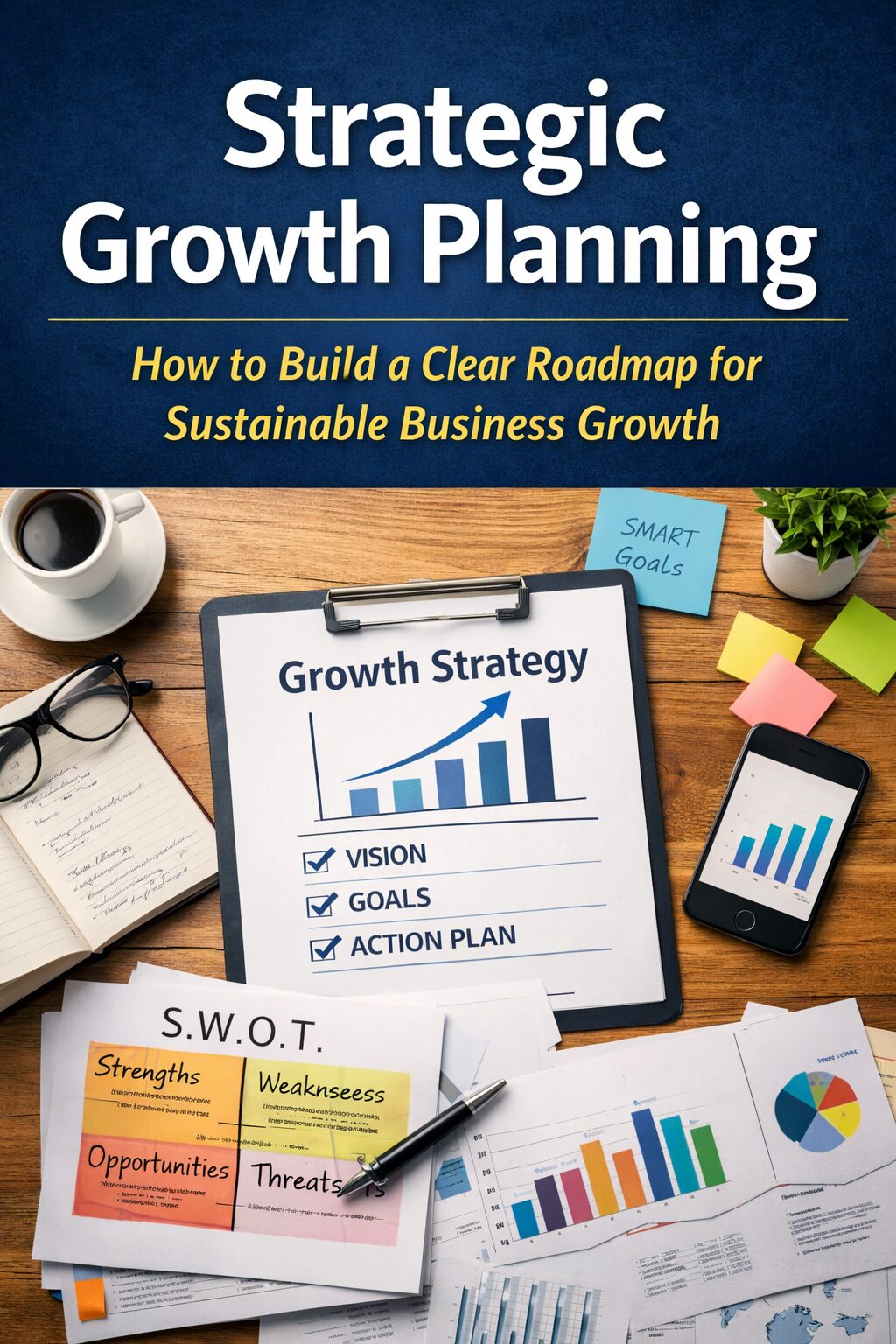
Strategic Growth Planning: How to Build a Clear Roadmap for Sustainable Business Growth
Strategic Growth Planning: How to Build a Clear Roadmap for Sustainable Business Growth
Developing a strategic growth plan means creating a clear, actionable roadmap that guides business expansion and long-term success. This guide walks business owners, leaders, and managers through each stage of the process, from defining purpose and direction to execution, measurement, and adaptation. Whether you’re leading a startup or an established organization, the goal is the same: grow intentionally, stay aligned, and make decisions with confidence.
A strong growth plan does more than outline goals. It connects vision to action, balances ambition with realism, and provides structure in an ever-changing market. With practical frameworks and real-world thinking, this approach helps businesses grow with purpose rather than guesswork.
Understanding the Foundations of a Strategic Growth Plan
Before setting initiatives or targets, it’s essential to establish a solid foundation. Growth without direction often leads to misalignment, wasted resources, and short-lived gains. A strategic growth plan begins with clarity around who you are, what you stand for, and where you’re going.
Mission and vision statements form the backbone of this foundation. They are not marketing slogans but practical tools that guide decision-making and align teams. Alongside them, clearly defined goals translate direction into measurable outcomes. When these elements work together, they create a framework that supports sustainable growth rather than reactive expansion.
By grounding your strategy in purpose and clarity, every initiative that follows has context, consistency, and accountability.
Defining Mission and Vision for Strategic Direction
A mission statement defines why your business exists and what it delivers at its core. It should be concise, authentic, and rooted in what differentiates your organization. A clear mission helps teams understand priorities and reinforces focus in daily operations.
A vision statement looks forward. It describes what success looks like in the long term and provides an aspirational target for growth. A strong vision motivates teams, guides leadership decisions, and acts as a filter when evaluating new opportunities.
When mission and vision align, decision-making becomes simpler. Leaders can quickly assess whether a new initiative, product, or partnership supports the company’s long-term direction. Together, these statements anchor your strategic growth plan and ensure expansion efforts remain intentional.
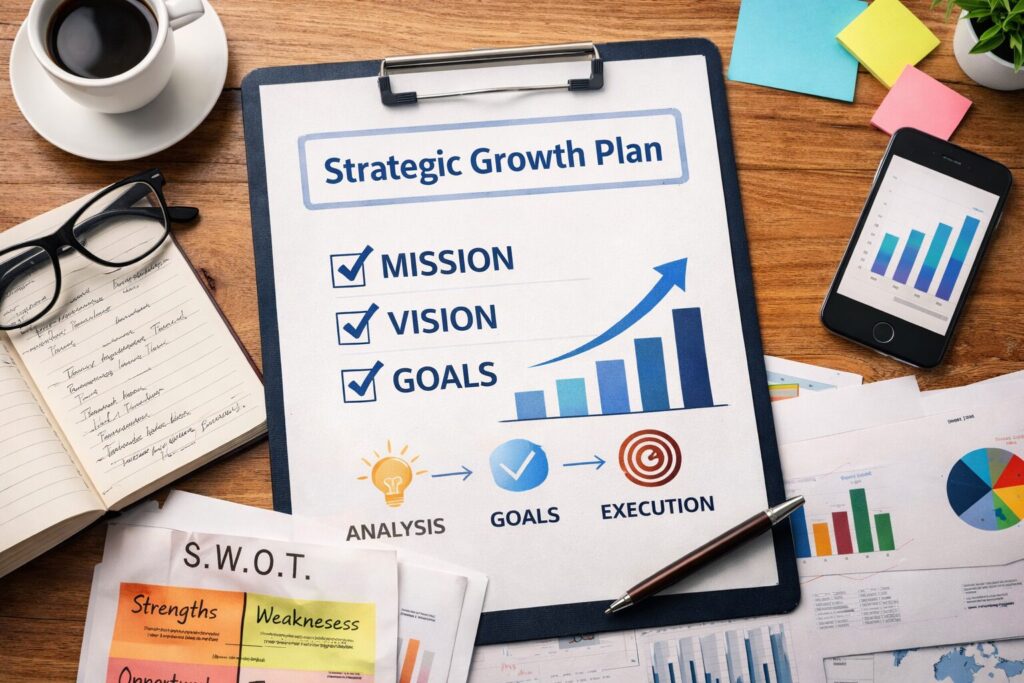
Setting Strategic Goals and Achievable Objectives
Strategic goals turn direction into action. They define what success looks like and provide clear benchmarks for progress. Effective goals are ambitious but realistic, pushing the business forward without overextending resources.
Using the SMART framework ensures objectives are specific, measurable, achievable, relevant, and time-bound. Instead of broad intentions, teams work toward clearly defined outcomes. Short-term objectives create momentum and accountability, while long-term goals keep the organization aligned with its broader vision.
Regularly reviewing objectives allows leaders to adapt as conditions change, ensuring the growth plan remains relevant and achievable.
Conducting a Comprehensive Situational Analysis
A strategic growth plan must be built on an accurate understanding of where the business stands today. Situational analysis provides that clarity by examining both internal capabilities and external market forces.
Frameworks like SWOT analysis and competitive benchmarking help identify strengths to leverage, weaknesses to address, opportunities to pursue, and threats to manage. This process isn’t about perfection; it’s about honesty. Understanding gaps and risks early allows leaders to plan proactively rather than react under pressure.
Market trends, customer behavior, and industry shifts should also be assessed. The insights gained here shape priorities and ensure growth efforts are grounded in reality.
Identifying Target Markets and Customer Pain Points
Growth accelerates when businesses clearly understand who they serve and why customers choose them. Defining target markets helps focus resources, messaging, and product development on the audiences that matter most.
Equally important is identifying customer pain points. These are the problems, frustrations, or unmet needs your business is uniquely positioned to solve. Insights can come from customer feedback, surveys, interviews, and behavioral data.
When strategies are built around real customer needs, value propositions become clearer, engagement improves, and long-term loyalty follows.
Designing a Strategic Planning Framework
Strategic planning works best as a structured, repeatable process rather than a one-time exercise. A clear framework brings alignment across leadership, teams, and stakeholders while maintaining momentum.
The process typically moves from research and analysis to goal-setting, prioritization, and initiative development. Defining milestones and ownership at each stage ensures accountability and reduces execution gaps.
A well-designed framework transforms ideas into coordinated action and allows the organization to adapt without losing direction.
Translating Insights into a Business Growth Plan
A business growth plan brings strategy to life. It organizes insights, goals, and priorities into a clear document that outlines initiatives, timelines, resources, and success metrics.
This plan acts as both a roadmap and a communication tool. It clarifies responsibilities, aligns teams, and ensures everyone understands how their work contributes to growth. Including milestones and performance indicators helps track progress and adjust when necessary.
For smaller businesses, simplicity matters. A clear, well-structured plan is more effective than a complex document that never gets used.
Building a Sustainable Growth Strategy
Sustainable growth balances short-term performance with long-term resilience. It considers scalability, operational capacity, and market volatility while remaining aligned with core values and vision.
Long-term strategies often span three to five years and include clear milestones that guide progress. Flexibility is essential, allowing leaders to adjust course as markets shift or new opportunities emerge.
Sustainable growth isn’t about chasing every opportunity. It’s about choosing the right ones and building systems that support consistent progress over time.
If you want a deeper breakdown of how to structure effective objectives, Atlassian provides a clear, practical overview of the SMART goals framework.
Leveraging Digital Marketing and Innovation
Digital tools play a critical role in modern growth strategies. A consistent online presence, supported by SEO, content marketing, email campaigns, and data analytics, increases visibility and engagement.
Automation and analytics help businesses scale efficiently, while innovation in business models or service delivery can unlock new revenue streams. Diversifying marketing channels reduces risk and strengthens long-term reach.
When digital strategy aligns with broader growth goals, it becomes a powerful driver rather than a disconnected effort.
Executing and Implementing the Growth Strategy
Execution is where many strategies fall short. Turning plans into results requires clear ownership, realistic timelines, and consistent follow-through.
Breaking goals into manageable initiatives, assigning responsibility, and allocating resources ensures progress stays on track. Regular check-ins and performance reviews help teams adapt quickly and address challenges before they escalate.
Leadership involvement is critical. When executives actively support and reinforce the strategy, alignment and accountability increase across the organization.
Monitoring, Evaluation, and Adaptive Planning
Ongoing evaluation keeps growth strategies relevant and effective. Tracking progress through KPIs and balanced scorecards provides visibility into what’s working and what needs adjustment.
Adaptive planning allows organizations to respond to change without losing momentum. Regular reviews, risk assessment, and contingency planning help businesses stay resilient in uncertain environments.
A culture that values data, feedback, and agility is better equipped to sustain growth over time.
Strategic Tools and Resources for Small Businesses
For small businesses, practical tools and templates simplify strategic planning and save time. Effective templates include mission and vision statements, SWOT analysis, goals, action plans, and performance metrics.
Digital planning tools support collaboration, version control, and ongoing updates. Knowing the difference between a business plan and a strategic plan helps leaders apply the right tool at the right time.
Incorporating strategic foresight and scenario planning further strengthens long-term resilience and innovation.
Conclusion
A strategic growth plan is not a static document but a living framework that evolves with your business. By grounding growth in purpose, setting clear objectives, executing with discipline, and adapting through ongoing evaluation, organizations position themselves for both immediate progress and long-term success.
With the right structure, tools, and commitment, turning strategic intent into measurable growth is not only achievable—it’s sustainable. For more practical insights and business strategy resources, PA Publishing continues to support organizations at every stage of growth.