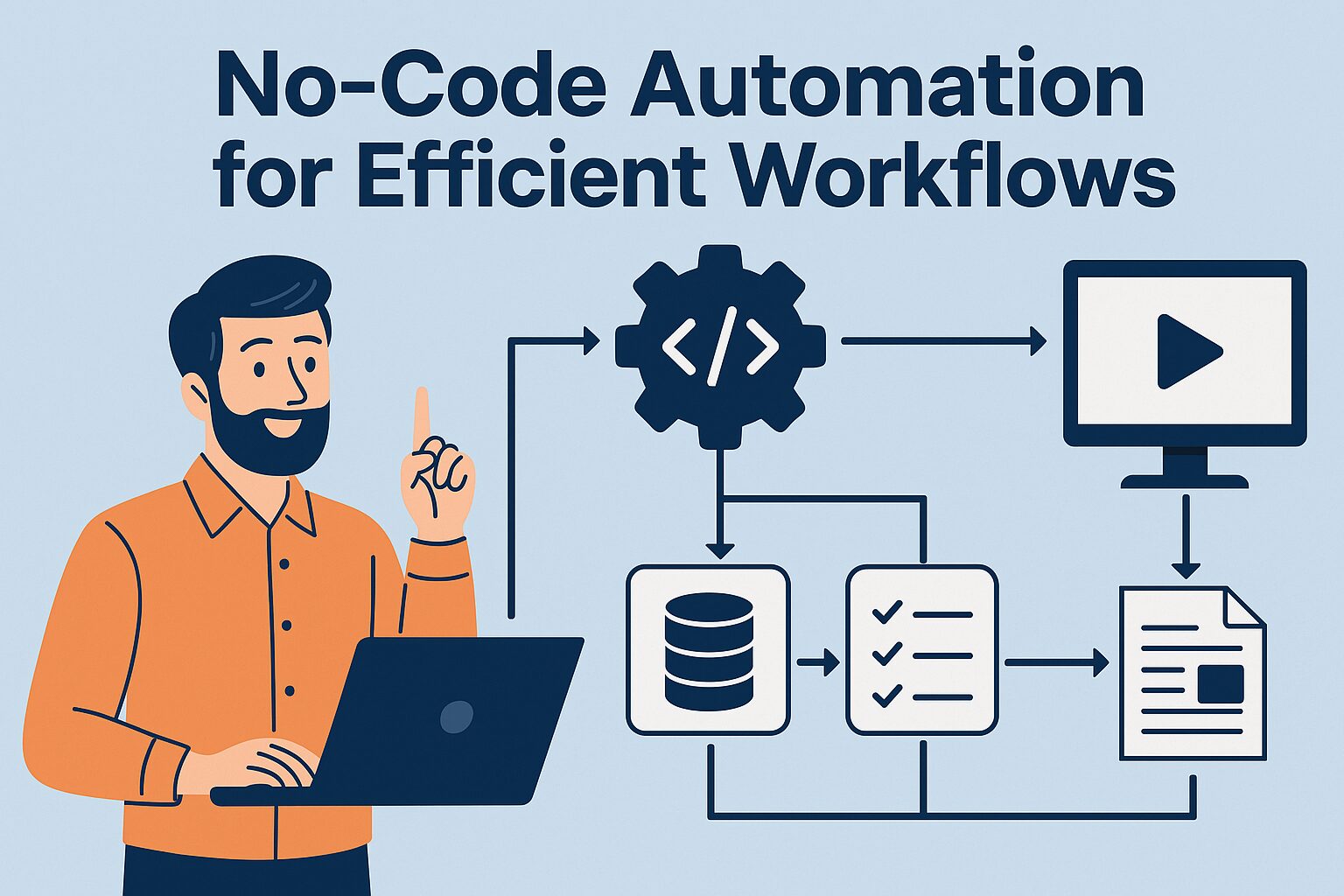
No-Code Automation: The Future of Scalable Business Efficiency
In the current ecosystem of enterprise operations, the capacity for rapid adaptation has shifted from a competitive luxury to a survival prerequisite. Historically, achieving this level of operational agility necessitated a heavy reliance on specialized engineering teams, a dependency that frequently created bottlenecks and stifled innovation. Breaking this status quo is a profound technological evolution: no-code automation. This disruptive force is empowering non-technical personnel to design, deploy, and manage complex workflows without writing a single line of code.
More than a mere convenience, this paradigm shift signals the democratization of technology across the corporate structure. By decoupling process automation from deep technical dependencies, organizations can realize unprecedented speed and scalability while simultaneously driving down operational costs. As enterprises graduate from ad hoc fixes to integrated ecosystems, no-code platforms allow them to streamline critical functions—ranging from marketing to finance—with superior efficiency. This article explores how no-code automation is reshaping business models, offering a strategic route to digital agility and sustainable growth in a hyper-competitive market.
Understanding the Paradigm Shift to No-Code Automation
Operational latency is often the silent killer of modern enterprise strategy; how much momentum is lost when a department head must wait weeks for IT to configure a basic API connection? In traditional corporate structures, the lag between identifying an inefficiency and deploying a solution was measured in fiscal quarters rather than days. This delay results from a historical reliance on “black box” development, where business logic remained locked behind complex syntax accessible only to engineers. No-code platforms fundamentally alter this dynamic, moving the enterprise from a rigid, request-based model to one of continuous, user-driven adaptation.
Differentiating No-Code Automation from Low-Code and Legacy Systems
To fully grasp the magnitude of this evolution, it is essential to delineate the tiers of digital development tools currently available. Although terminology is frequently used interchangeably, the distinctions between legacy architectures, low-code environments, and true no-code solutions define an organization’s strategic capabilities. Conflating these concepts often leads to misaligned expectations regarding resource allocation and implementation speed.
Architectures rooted in legacy systems depend heavily on bespoke programming, requiring deep expertise in languages such as Python, Java, or C++. While these systems offer infinite customizability, they carry a high Total Cost of Ownership (TCO) and accumulate significant technical debt, rendering them resistant to rapid change. Occupying the middle of the spectrum is low-code development. These platforms act as accelerants for professional developers by abstracting common tasks, yet they still demand a foundational understanding of coding logic to handle edge cases. They are tools designed for efficiency, but not necessarily for autonomy.
No-code automation, conversely, achieves a total abstraction of underlying code via Visual Integrated Development Environments (IDEs). It employs a declarative programming approach, where the user defines what the application should accomplish rather than describing how the computer should execute it. This distinction is characterized by specific features:
- Visual Logic: Users construct workflows using drag-and-drop interfaces that resemble flowcharts rather than scripts.
- Pre-built Integrations: Connectors to major SaaS platforms (such as Salesforce, Slack, or HubSpot) come pre-configured, eliminating the need to write raw API calls.
- Guardrails: The platforms inherently prevent syntax errors, ensuring the focus remains on business logic rather than debugging code.
Are you new to this concept? Here’s a good read if you are new to this concept: What is No‑Code Automation? Guide and 5 Best Tools — Creatio — provides a concise definition of no-code automation and how businesses can automate workflows without coding.
The Role of Democratization in Modern Business Agility
Technology is only as disruptive as the people who wield it; thus, the true power of no-code lies in who it empowers. We are witnessing the ascent of the “Citizen Developer”—a subject matter expert (SME) who creates application capabilities for immediate consumption. By placing automation tools directly into the hands of those who understand the nuance of the workflow—whether a marketing director or a supply chain analyst—companies eliminate the “translation loss” that typically occurs when business requirements are conveyed to technical teams.
Such democratization fosters a decentralized innovation model. Rather than a central IT department acting as a bottleneck for minor requests, IT evolves into a governance body that secures and sanctions the tools. This structural change allows the organization to react to market shifts with an agility that was previously unattainable. When the individuals closest to the problem are equipped to build the solution, the feedback loop significantly shortens, cultivating a culture of continuous improvement.
“The future of coding is no coding at all. The most influential programming language of the future will be human intent, translated directly into software behavior.”
— Chris Wanstrath, Co-founder of GitHub
Key Benefits: Cost Reduction, Speed, and Scalability
Beyond the philosophical shift in development culture, the adoption of no-code automation delivers quantifiable economic advantages. As organizations pivot toward leaner operating models, the capacity to achieve more with fewer specialized resources becomes a primary competitive differentiator. The value proposition rests on three pillars that directly influence operational resilience and the bottom line.
First, the impact on speed to market is immediate. Traditional software development lifecycles (SDLC) involve prototyping, coding, testing, and deployment phases that can span months. No-code platforms compress this timeline into hours or days. This rapid prototyping capability allows businesses to test hypotheses and pivot strategies in real-time, a crucial asset in volatile markets. Secondly, cost efficiency is realized not just by reducing reliance on expensive engineering talent for routine tasks, but by minimizing the opportunity cost of manual labor. According to research by Forrester, utilizing low-code/no-code tools can reduce development costs by up to 74% compared to traditional methods.
Finally, scalability is intrinsic to the architecture of modern no-code platforms. Because these tools are typically cloud-native (SaaS), they offer elastic scalability regarding data volume and workflow complexity. An automation designed to handle ten leads a day can often scale to handle ten thousand without requiring an architectural rewrite, ensuring that as the business grows, its foundational processes remain robust.
- Reduced Technical Debt: Since the vendor manages underlying code maintenance and security updates, the enterprise is relieved of legacy maintenance burdens.
- Operational Consistency: Automating rule-based tasks eliminates human error, ensuring data integrity and compliance with regulatory standards.
- Resource Optimization: High-level engineers are freed to focus on core product innovation and complex architectural challenges rather than internal tooling.
Transforming Operations Through Real-World Use Cases
Strategy remains theoretical until it survives the friction of execution. The gap between conceptualizing a digital initiative and implementing it is often filled with manual administrative tasks that drain human capital. While the benefits of democratization are compelling, the true value of no-code automation is best understood through its practical application across distinct business functions. By translating abstract capabilities into tangible workflows, organizations move from possessing potential to executing operational excellence.
Optimizing Marketing and CRM Workflows with No-Code Automation
Speed determines conversion success in the high-velocity world of digital marketing. Teams frequently struggle with fragmented data ecosystems where social media leads, email engagement metrics, and website analytics reside in isolated silos. No-code automation acts as the connective tissue, enabling a unified customer view without requiring constant intervention from data engineers.
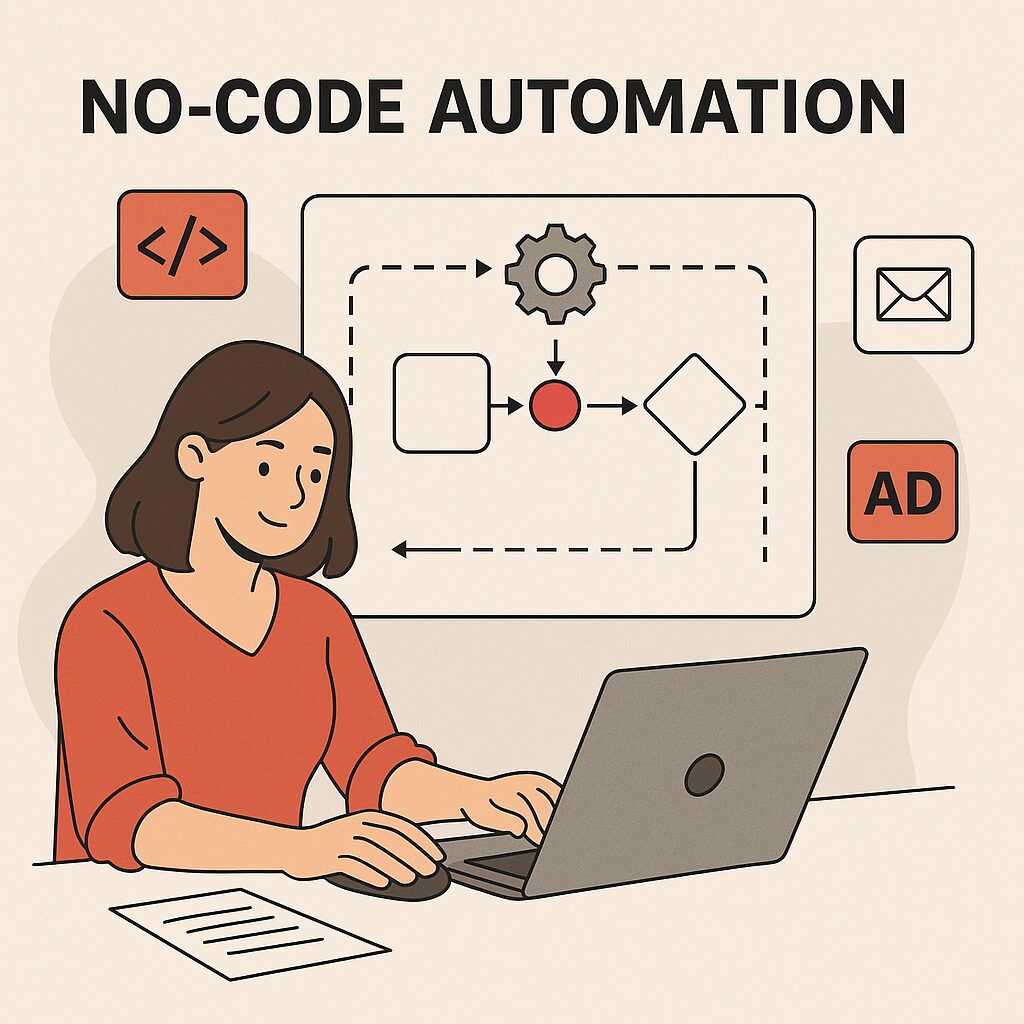
Consider the lifecycle of a prospective client. In a traditional setup, a lead captured via a landing page might stagnate in a database until a manager manually exports a CSV file and uploads it to a Customer Relationship Management (CRM) system. This latency can be fatal to conversion rates. Through automated orchestration, this linear process transforms into an instantaneous, parallel workflow:
- Instant Data Synchronization: A form submission triggers a webhook that instantly populates the CRM, ensuring the sales team has access to real-time data.
- Lead Enrichment: The automation tool queries third-party databases (like Clearbit or LinkedIn) to append firmographic data—such as company size or industry—to the lead profile automatically.
- Cross-Platform Notification: Simultaneously, a notification is pushed to a communication channel like Slack or Microsoft Teams, tagging the specific account executive responsible for that territory.
Such integration allows marketing professionals to focus on strategy and creative rather than data entry. According to a report by HubSpot, companies that automate lead management see a 10% or greater increase in revenue in 6-9 months. By removing the friction of manual data transfer, no-code tools ensure that the Customer Acquisition Cost (CAC) is optimized while enhancing the overall prospect experience.
Streamlining Finance, HR, and E-Commerce Processes
While marketing focuses on growth, the “back office” functions of Finance and Human Resources serve as the operational backbone of the enterprise. These departments are historically plagued by repetitive, paper-heavy processes that are prone to human error. No-code automation introduces rigor and auditability to these workflows, ensuring compliance and efficiency. Similarly, in the E-Commerce sector, the ability to synchronize inventory across channels is critical for maintaining brand reputation.
In the realm of Human Resources, the onboarding process represents a critical first impression for new hires. A manual approach involving email chains and disparate document requests often leads to administrative bottlenecks. A no-code workflow can automate the entire sequence: generating contract documents, triggering IT provisioning requests, and scheduling orientation sessions once a candidate status changes to “Hired.” This creates a seamless employee experience.
Accuracy is even more paramount for finance and e-commerce operations. Automating the reconciliation between payment gateways (like Stripe) and accounting software (like Xero or QuickBooks) eliminates the risk of financial discrepancies. In e-commerce, inventory synchronization prevents the dreaded scenario of overselling. When a stock level depletes on Shopify, a no-code automation can instantly update the listing on Amazon and eBay while alerting the procurement team to reorder.
“Automation is not about replacing the human workforce; it is about elevating the human capability to focus on high-value cognitive tasks rather than repetitive computation.”
— Vijay Tella, CEO of Workato
Evaluating Popular Tools for Business Efficiency
Navigating the burgeoning marketplace of no-code tools can be daunting for decision-makers. The landscape is segmented into various categories, each serving a distinct architectural purpose within the technology stack. Selecting the right tool requires understanding whether the goal is simple data transfer, complex logic processing, or interface creation. It is not merely about picking a software but choosing a platform that aligns with the organization’s scalability requirements.
Leading Integration Platforms (iPaaS)
Integration Platform as a Service (iPaaS) tools are the engines of no-code automation, designed to connect disparate applications. Zapier remains the ubiquitous entry point for many businesses, renowned for its linear, “if this, then that” logic which is accessible to beginners. However, for enterprise-grade workflows requiring branching logic, error handling, and data manipulation, Make (formerly Integromat) offers a visual canvas that allows for complex, non-linear scenario planning. These platforms serve as the middleware, invisible yet essential for data mobility.
Database and Interface Builders
Beyond moving data, businesses often need to structure and visualize it. Airtable has revolutionized the concept of the spreadsheet, functioning as a user-friendly relational database that supports rich data types and views. For organizations looking to build customer-facing portals or internal tools without coding, Bubble and Softr provide powerful environments to design web applications. These tools allow non-technical founders and product managers to deploy fully functional software products, significantly reducing the Time-to-Value (TTV) compared to traditional development cycles.
Navigating Risks and Strategic Implementation
Innovation without oversight is a recipe for vulnerability; is the greatest threat to enterprise security now the well-intentioned employee seeking efficiency? While the allure of rapid deployment and democratized innovation is undeniable, the decentralization of software creation introduces a complex layer of risk that organizations must actively manage. As businesses pivot away from rigid IT hierarchies, they face the challenge of balancing the autonomy of the “Citizen Developer” with the necessity of corporate oversight. Integrating no-code tools without a robust strategic foundation can inadvertently create fragmented data ecosystems and security vulnerabilities, undermining the very efficiency the technology promises to deliver.
Addressing Security Concerns and Limitations of No-Code Automation
Leaders must confront the reality that “no-code” does not equate to “no-risk” before scaling these solutions. The ease of access that defines these platforms can lead to the proliferation of Shadow IT—unauthorized software deployed without the explicit approval or knowledge of the IT department. This phenomenon creates invisible pockets of data usage that bypass standard security protocols, complicating compliance with regulations such as GDPR or CCPA.
Furthermore, while these platforms are powerful, they are not a panacea for every technical challenge. Leaders must recognize the architectural limitations inherent in visual development environments. Complex computational tasks, high-frequency trading algorithms, or applications requiring granular memory management often hit a “complexity wall” in no-code environments. Attempting to force these platforms to handle use cases better suited for traditional coding can lead to performance bottlenecks and unmaintainable workflows.
Organizations must conduct rigorous due diligence on platform vendors to navigate this landscape effectively. Security relies heavily on the provider’s infrastructure, necessitating a close examination of their certifications (such as SOC 2 Type II) and data residency policies. According to a report by Cisco, the average enterprise uses over 1,200 cloud services, the vast majority of which are unapproved, highlighting the critical need for visibility. Common risks that must be mitigated include:
- Data Sovereignty Issues: Inadvertently transferring sensitive customer data across borders through unvetted third-party integrations or plugins.
- Vendor Lock-In: Relying too heavily on a proprietary platform’s logic, making it difficult to migrate workflows if pricing models change or the vendor ceases operations.
- API Rate Limits: Exceeding the data transfer limits of connected services (like Salesforce or Twitter) due to poorly optimized automation loops, leading to process failures.
Developing a Governance Framework for Citizen Developers
To harness the power of no-code without succumbing to chaos, the role of the IT department must evolve from a “gatekeeper” to a “guardrail builder.” A successful governance strategy empowers users to solve their own problems while operating within a predefined safety zone. This shift requires establishing a formal structure where IT sets the standards for security, data access, and testing, while business units execute the logic.
Central to this approach is the establishment of a Center of Excellence (CoE). This multidisciplinary team—comprising IT professionals, business analysts, and power users—serves as the governing body that establishes best practices and sanctions approved tools. The CoE ensures that no automation enters a production environment without passing a compliance review, checking for errors that could corrupt databases or expose private information. This modus operandi transforms shadow IT into “managed citizen development.”
“Governance is not about restricting innovation; it is about providing a safe highway for speed. Without guardrails, the fastest cars are just the most dangerous.”
— Dion Hinchcliffe, VP and Principal Analyst at Constellation Research
Effective governance also relies on the principle of Least Privilege. Employees should only be granted access to the data connectors and APIs strictly necessary for their specific workflows. By segmenting environments—keeping “sandbox” development separate from live business data—organizations can foster experimentation without risking operational continuity.
Steps for Successfully Deploying No-Code Automation Strategies
Implementing a no-code architecture is as much a cultural shift as it is a technological upgrade. Rushing to adopt tools without a roadmap often leads to a “sprawl” of disconnected automations that offer little strategic value. A phased approach ensures that the organization builds internal capability and confidence before scaling to mission-critical processes.
Initiating this journey begins with a comprehensive audit of inefficiencies. Leaders should map existing workflows to identify high-volume, repetitive tasks that suffer from latency due to manual intervention. Once identified, the deployment should follow a structured trajectory:
- Discovery and Pilot: Select a low-risk, high-impact process—such as employee leave requests or social media scheduling—to serve as a proof of concept. This builds early momentum and demonstrates Return on Investment (ROI).
- Standardization of the Stack: Limit the number of supported platforms to avoid fragmentation. Choose one major iPaaS (like Zapier or Make) and one interface builder to ensure skills are transferable across teams.
- Upskilling and Certification: Invest in training programs. Encouraging staff to become “certified” in specific no-code tools creates a recognized path for career development and ensures a baseline of technical competency.
- Iterative Scaling: Once the foundation is secure, expand to cross-departmental workflows. Continuously monitor performance metrics to ensure the automations adapt to changing business needs.
The Intersection of Artificial Intelligence and No-Code Automation
While logic governs the flow of data, intelligence governs the quality of decisions. Static rules can only account for foreseeable scenarios, but what happens when business logic requires judgment, interpretation, or prediction? While standard no-code tools excel at linear “if-this-then-that” execution, they historically lacked the nuance to handle unstructured data or ambiguity. This limitation is rapidly dissolving as Artificial Intelligence (AI) becomes deeply integrated into visual development platforms, giving rise to intelligent automation.
Leveraging AI for Intelligent and Predictive Workflows
Integrating AI into no-code environments signifies a transition from purely reactive systems to proactive, data-driven operations. In a traditional automation setup, a workflow might trigger an email when a form is submitted. By embedding AI, that same workflow can now analyze the sentiment of the submission, categorize the urgency based on linguistic patterns, and draft a personalized response using Generative AI before a human ever reviews it. This shift moves the technology from simply moving data to actually understanding content.
Platform providers are increasingly embedding Large Language Models (LLMs) and Natural Language Processing (NLP) directly into their interface builders and logic flows. This evolution allows non-technical users to deploy sophisticated functionalities that previously required teams of data scientists. For instance, a no-code app can now utilize computer vision to extract invoice details from a scanned PDF and populate a database, or use predictive modeling to forecast inventory shortages based on historical sales velocity. This capability is often referred to as Hyper-automation—an infrastructure where AI acts as the decision-maker within the guardrails of a no-code process.
By layering intelligence atop standard automation, organizations can unlock distinct operational capabilities:
- Unstructured Data Processing: AI agents can parse messy data sources—such as email threads or social media comments—transforming them into structured entries suitable for CRM or ERP systems.
- Dynamic Decision Making: Instead of rigid boolean logic, workflows can use probabilistic scoring to route tasks. For example, a loan application could be auto-approved, rejected, or flagged for human review based on a complex risk assessment model.
- Generative Output: Marketing teams can automate the creation of first-draft blog posts, ad copy, or graphical assets within their project management tools, drastically reducing the Time-to-Content.
We are moving from a world where we had to learn the language of computers, to a world where computers are learning the language of humans. This is the democratization of expertise.”
— Satya Nadella, CEO of Microsoft
Securing Competitive Advantage in the Age of Automated Efficiency
As the barrier to entry for building sophisticated software collapses, the definition of competitive advantage is being rewritten. Merely having a digital presence or a functional app is no longer a differentiator; the new battleground is operational velocity and adaptability. Companies that successfully merge no-code agility with AI intelligence create a flywheel effect: they build solutions faster, gather data sooner, and iterate on their processes with greater precision than competitors relying on traditional development cycles.
This landscape presents a binary outcome for modern enterprises: adapt to citizen-led innovation or face gradual obsolescence known as Digital Darwinism. Organizations that resist this shift, clinging to siloed IT structures and manual processes, will find their overhead costs ballooning while their agility stagnates. Conversely, according to a forecast by Gartner, by 2025, 70% of new applications developed by enterprises will use low-code or no-code technologies, up from less than 25% in 2020. This statistic underscores that adoption is not merely a trend but a strategic imperative for survival.
Ultimately, the future of business efficiency lies in the successful orchestration of human creativity and machine execution. No-code automation provides the canvas, and AI provides the paint, but the masterpiece is the strategy defined by leadership. By empowering the workforce to build their own solutions, maximizing the utility of cognitive automation, and maintaining robust governance, businesses can secure a resilient, scalable future. In this new era, the most successful organizations will be those that treat automation not as a technical task, but as a fundamental core competency of their corporate culture.
The Strategic Imperative of Democratized Innovation
The transition to no-code automation represents a fundamental restructuring of the enterprise DNA. By dismantling the technical barriers that once segregated strategy from execution, organizations unlock a reservoir of latent potential within their workforce. This evolution moves beyond mere cost savings; it fosters a culture where innovation is continuous and decentralized. However, true success demands a balanced approach where governance and creativity coexist, ensuring that the velocity of deployment never compromises the integrity of the data architecture.
As Artificial Intelligence further augments these platforms, the distinction between technical and non-technical roles will continue to blur, placing the power of digital transformation directly into the hands of subject matter experts. In an era defined by volatility, the ability to rapidly configure and scale workflows is the ultimate competitive advantage. Businesses that embrace this paradigm shift will not only survive market disruptions but dictate the pace of their industry, turning operational efficiency into a sustainable engine for growth.
Bibliography
Gartner. “Gartner Says Cloud Will Be the Centerpiece of New Digital Experiences.” Gartner Newsroom, November 10, 2021. https://www.gartner.com/en/newsroom/press-releases/2021-11-10-gartner-says-cloud-will-be-the-centerpiece-of-new-digital-experiences.
HubSpot. “The State of Marketing 2024.” HubSpot Reports, 2024. https://www.hubspot.com/state-of-marketing.
Zapier. “The State of Business Automation 2021.” Zapier, 2021. https://zapier.com/blog/state-of-business-automation-2021/.