Invoicing Tips for Freelancers
Invoicing Tips for Freelancers
Freelancing is an incredible opportunity that allows you to work at your own pace and earn a steady income. However, as a freelancer, you are also solely responsible for managing your payments. One critical part of this process is creating accurate yet simple invoices for efficient transactions. If you are unaware of invoicing tips for freelancers and struggling to request payments, keep on reading!
Key Invoicing Tips for Freelancers
There are nearly 75 million freelancers in the US; around 9 in 20 workers are self-employed. If you are one of them and wonder about the key invoicing tips for freelancers, here are the suggestions:
Outline Contact Details
First things first, you should clearly outline all contract details, including the work you are going to provide and the expected amount.
Convey the deadline of the assignment and the preferred mode of payment so the client doesn’t face any confusion.
Also, in the agreement, be upfront and transparent about things like late fees and additional payments for edits. This way, you’ll be able to create clear invoices that receive quick approval.
Make a Clear Invoice
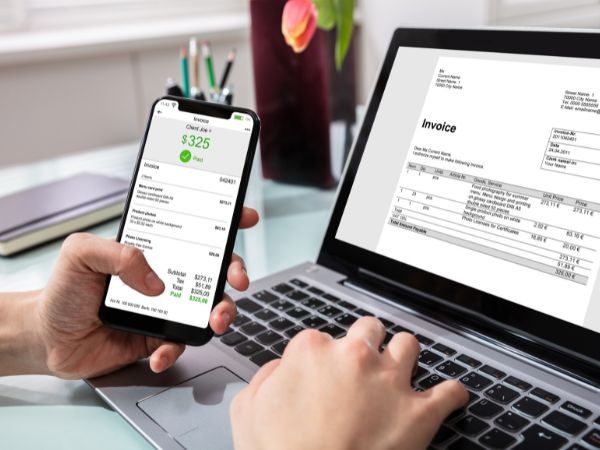
Well, you shouldn’t shy away from enhancing your brand awareness wherever possible, and an invoice is a good stage for that. So, make sure your invoice is a representation of your brand and services and has the following key elements:
- Your agency or business logo and brand colours.
- Contact information for both you and the client.
- List of services with pricing for each.
- Clearly state the payment terms and invoice date.
- Sum up the total amount at the end of the invoice.
- Must specify how you want to be paid, whether through bank transfer or other means.
Here’s an example:
[Business Logo]
BrightWave Digital Marketing
123 Creative Lane, Suite 4, New York, 10001
Invoice No: BGYT20
Date: 2 July 2025
Billed To: FareTech Solutions
[Services Offered]
- Google Ads Setup + Optimization (2 months): $1000
- Social Media Management (1 month): $800
- Professional Copywriting Services: $1000
- Subtotal: $2800
Payment is due within seven days of invoice issue. Bank transfer to [XY] Bank of America.
Include Tax and Fees
Some freelance contracts are complicated, which may lead you to incur additional costs. Therefore, you should include those expenses in your invoice.
For instance, if you had to purchase any stock images for the project or a third-party tool to streamline the client’s workflow, you should mention that in the invoice.
On top of that, if you charge a fee for late payments, include that information in your invoice. Mention it like “8% late payment fees will be implemented.”
Set Reminders
While managing multiple projects, you are likely to forget to send invoices to your clients. Not only does this lead to late payments, but it also disrupts the overall business workflow.
To avoid this issue, one of the key invoicing tips for freelancers is to set invoice reminders. For that, you can invest in automated tools such as Wave. It’s an advanced software compatible with web, iOS, and Android.
This tool is also user-friendly, featuring built-in payment processors and comprehensive reporting capabilities. You can rely on it to send invoice reminders whenever there’s a payment due.
Be Mindful of Client’s Payment Schedule
This advice may seem unheard of, but you should be mindful of the client’s payment schedule. Some businesses take 30 or 60 days to clear all their payments, even if you’ve requested it within a week.
That’s why we suggest looking at the agreed-upon terms in the contract before sending an invoice.
Or you can ask the client about their billing cycle. This eliminates any chances of misunderstandings and helps you establish reliable work relationships.
Conclusion
It’s important to follow all the invoicing tips for freelancers to ensure you run your business steadily and get payments on time. When you have cash in hand, you can then invest that money in increasing your services and pay your team without any delays.