Email Marketing for Beginners: A Formal Introduction to Core Concepts and Best Practices
Email marketing for beginners starts with a simple idea: targeted, permission-based communication builds stronger relationships than broad, unsolicited outreach. Because the channel combines reach, personalization, and measurability, email remains a foundational tool for organizations seeking consistent engagement and sustainable growth.
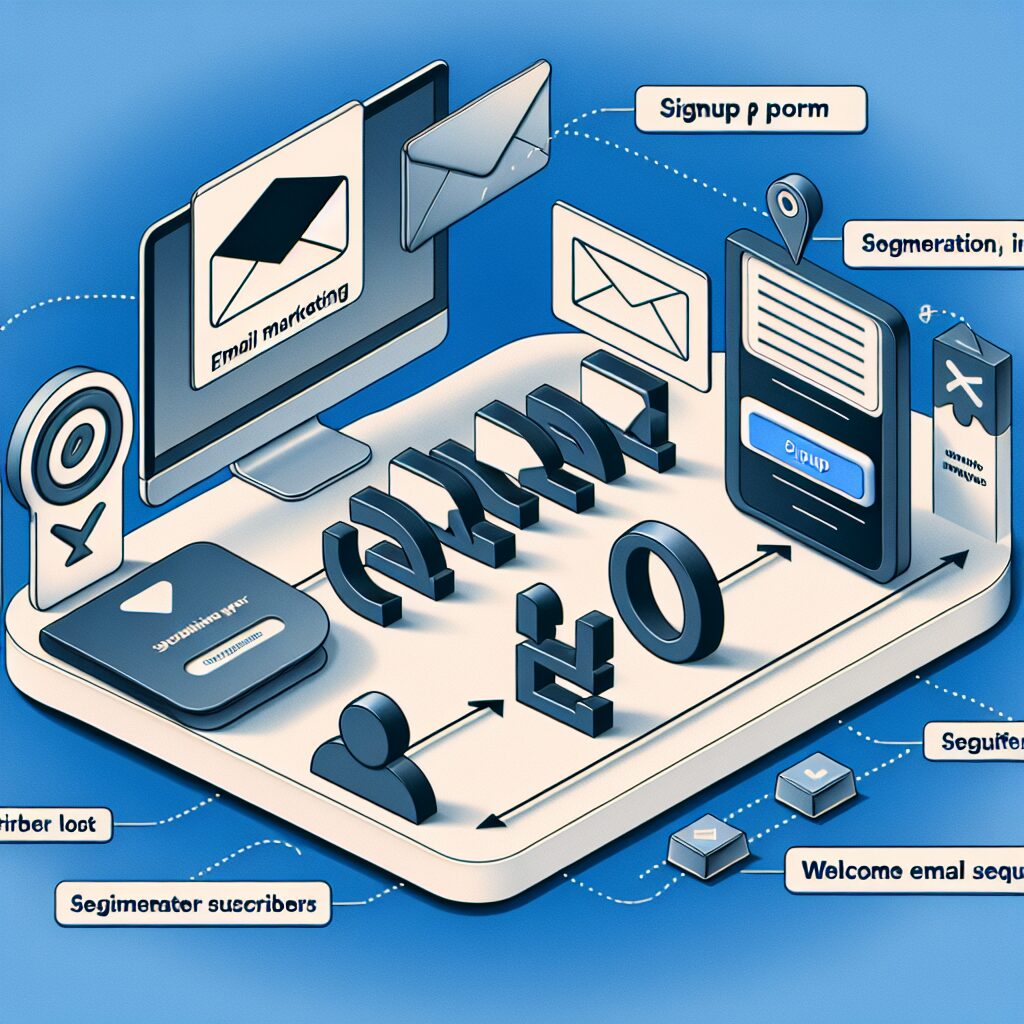
Successful email programs depend on opt-in consent, relevant messaging, and structured campaigns that move subscribers from awareness to action. In practice, list quality, deliverability, and audience segmentation determine whether messages reach the inbox and feel worth reading.
The sections below introduce core concepts such as campaign objectives, email types, content structure, and basic performance metrics. They also emphasize trust and compliance essentials, including transparent unsubscribe options, careful data handling, and alignment with regulations such as GDPR and CAN-SPAM.
With a methodical approach, beginners can avoid common pitfalls and build repeatable workflows. Over time, clear strategy, consistent testing, and ethical communication become the practical foundation for emails that inform, persuade, and deliver measurable value.
Foundations of Email Marketing for Beginners
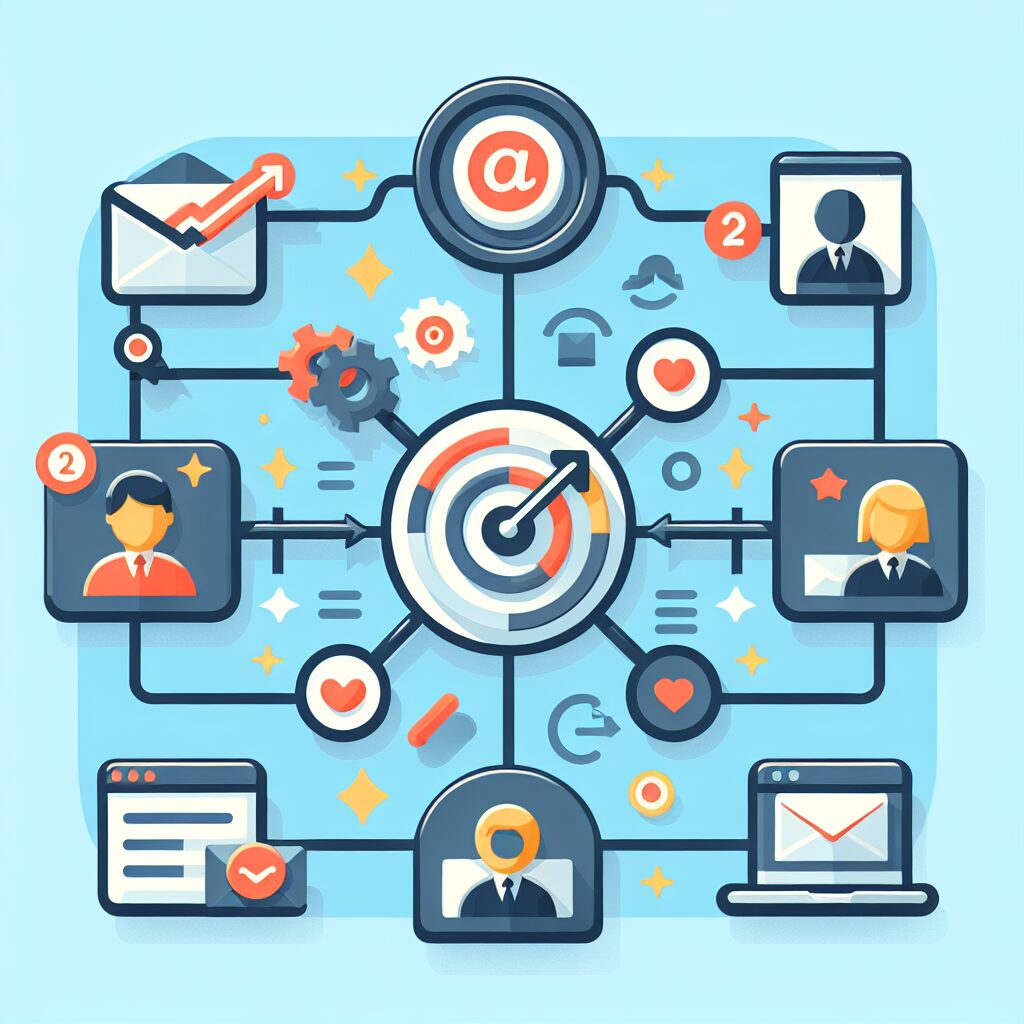
Effective email marketing is rarely the result of “better writing” alone. Strong performance usually comes from the system behind each send: how contacts are organized, how journeys are designed, and how success is measured. The concepts in this section explain how individual messages become an accountable communication program.
Key Terms: Lists, Campaigns, Automations, and Funnels
Getting results is easier when the building blocks are clearly defined. The terms below describe how subscribers are stored, how messages are delivered, and how progress toward outcomes is tracked. Clear definitions also prevent avoidable mistakes, such as blasting one message to everyone or over-automating without a goal.
A list (sometimes called an audience) is the master collection of contacts and attributes such as email address, consent status, preferences, and behavioral data. A campaign is a planned set of emails—often time-bound—built around a single objective, such as a launch or seasonal promotion. By contrast, automations are event-driven sequences triggered by behavior (signup, purchase, inactivity) and designed to run consistently with minimal manual effort.
A funnel describes the broader path from first awareness to repeat purchase, and email can support multiple stages of that journey. Many teams map funnels with simplified stages (e.g., awareness → consideration → conversion → retention) and align sequences to each stage using segmentation and triggers.
- Lists: where contacts live; quality depends on accurate fields and consent tracking.
- Campaigns: scheduled sends; best for announcements, promotions, and time-sensitive updates.
- Automations: triggered flows; best for onboarding, recovery, and lifecycle messaging.
- Funnels: journey model; used to align content and KPIs to each stage.
“Content is king, but distribution is queen—and she wears the pants.” — Jonathan Perelman
How Email Marketing Fits into the Marketing Mix
Email performs best as part of a coordinated channel strategy rather than as a standalone tactic. It can connect paid, social, search, and on-site experiences into a consistent sequence of messages. For beginners, understanding this role helps prevent fragmented outreach and mismatched expectations.
Relative to social media, email provides direct reach to opted-in recipients without relying on algorithmic feeds. Compared with paid advertising, it often offers lower marginal cost per message once the list is established, which makes it especially valuable for retention and reactivation. It also functions as a “system of record” for communication cadence: clicks, conversions, and non-response can all inform segmentation and follow-up.
In many programs, email becomes the bridge between acquisition and conversion. A paid ad may drive the first signup, while a welcome series turns curiosity into an informed decision. Similarly, a blog post or webinar can generate leads, and email can nurture those leads with curated resources and timely reminders. For an industry perspective on return measurement, Litmus email marketing ROI research summarizes how organizations evaluate email’s value relative to other channels (results vary by industry and measurement method).
Common Use Cases and Typical Campaign Objectives
Once the channel’s components and role are clear, choosing what to send becomes more straightforward. Common use cases become easier to manage when each email is tied to a defined purpose. The goal is to connect send types to measurable outcomes, not simply to “stay in touch.”
Some messages are primarily informational (e.g., policy updates), while others are designed to prompt action (e.g., trials, purchases, bookings). Strong programs set a single primary objective per email and pair it with a metric that reflects that objective, such as click-through rate for consideration or completed purchases for conversion.
- Welcome and onboarding: introduce brand value, set expectations, and drive a first key action (account setup, preference selection, first purchase).
- Newsletter and content digest: build ongoing engagement, increase site visits, and strengthen topical authority.
- Product or feature announcements: educate existing users, encourage adoption, and reduce support friction through clear guidance.
- Promotions and launches: generate revenue within a defined window, often using urgency and segmented offers.
- Cart or browse recovery: reduce abandonment by addressing common barriers (shipping, fit, trust signals, timing).
- Re-engagement: identify inactivity, confirm continued interest, and protect deliverability by sunsetting non-responders.
Objective setting becomes more precise when paired with a simple measurement plan. A re-engagement message might prioritize positive engagement signals (opens, clicks, replies) over immediate sales, while a launch sequence may focus on conversion rate and revenue per recipient. This alignment keeps evaluation honest by judging success according to intent rather than a single universal metric.
Building a Compliant and High-Quality Email List
List building determines whether your program starts with momentum or friction. When contacts are collected without clear permission, deliverability, trust, and reporting become unreliable before the first campaign is even sent. This section focuses on the practices that make subscriber data both usable and defensible.
For email marketing for beginners, a strong list is built through consent standards, ethical growth, and consistent maintenance. These fundamentals reduce avoidable complaints, regulatory risk, and the costly need to “rebuild” later.
Permission, Consent, and Regulatory Basics (CAN-SPAM, GDPR, CASL)
Email rules vary by jurisdiction, but the underlying expectation is consistent: people should know what they are signing up for and be able to opt out easily. The frameworks below clarify common requirements around consent, identification, and unsubscribing. Treat this as a practical baseline rather than legal advice.
In the U.S., CAN-SPAM generally permits marketing emails without prior opt-in, but it requires accurate header information, non-deceptive subject lines, a valid physical address, and a clear unsubscribe mechanism honored promptly. In the EU/UK, GDPR typically requires a lawful basis for processing and, in many marketing contexts, freely given, specific, informed, unambiguous consent, supported by records showing when and how permission was obtained.
Canada’s CASL is widely regarded as one of the strictest regimes, often requiring express consent (or tightly defined implied consent), plus identification and simple opt-out. A practical approach is to follow the strictest common denominator: confirmed opt-in, clear expectations, and auditable records. Official guidance is available from GDPR.eu and the U.S. FTC/FCC CAN-SPAM overview.
- Identity transparency: “From” names and domains should match who you are.
- Consent evidence: store signup timestamp, source, and form language shown.
- Unsubscribe integrity: one-click or friction-minimized opt-out, processed quickly.
- Purpose limitation: use data only for the stated reason; avoid surprise sends.
“Privacy is not an option, and it shouldn’t be the price we accept for just getting on the Internet.” — Gary Kovacs
Ethical List Growth Methods and Lead Magnets
List growth is most sustainable when the value exchange is explicit. Subscribers grant access to their inbox, and you deliver something genuinely useful in return. This subsection focuses on acquisition methods that attract the right people, not just more addresses.
High-performing lists are commonly built through intent-driven signups such as checkout and account creation, content subscriptions, webinar registrations, and product waitlists. Rather than defaulting to “10% off,” lead magnets tied to a real problem often attract stronger-fit subscribers—especially in B2B, where relevance tends to outperform novelty. A pricing worksheet or implementation checklist, for example, can indicate higher intent than a generic ebook.
Results also depend on placement and language. Embedding a short form at the end of a high-intent article can outperform an aggressive pop-up because it appears at a moment of higher trust. Set expectations clearly: “Twice-monthly insights” communicates more than “updates,” and that clarity often reduces spam complaints even when volume rises.
- Content upgrades: templates, calculators, or cheat sheets tied to one page’s topic.
- Events: webinars and workshops with segmented follow-up based on attendance.
- Waitlists: early access to features or limited releases (strong for launches).
- Preference-first onboarding: ask what topics subscribers want to receive.
Shortcuts that inflate volume can degrade outcomes. Purchased lists, scraped contacts, and “co-registration” schemes often increase bounces and complaints, which may damage sender reputation long after the initial spike fades.
List Hygiene, Segmentation Readiness, and Data Quality
After signups begin, the next challenge is preventing silent list decay. Outdated contacts, inconsistent fields, and missing consent metadata can quietly erode performance and targeting. The routines below keep the database usable for segmentation and reliable for reporting.
Effective hygiene starts with basics: automatic handling of bounces, suppression of unsubscribes, and filtering role-based addresses (e.g., support@) when appropriate. Add a simple engagement policy on top of that: if a contact has not clicked or opened in a defined window (often 90–180 days, depending on send frequency), move them into a re-permission or sunset flow. These steps protect both metrics and deliverability, since mailbox providers weigh engagement signals heavily in inbox placement decisions.
Clean segmentation is much easier when data is structured early. Use consistent field naming, normalize values (e.g., “US” vs. “United States”), and separate immutable facts (signup source, consent type) from dynamic attributes (last purchase date, lifecycle stage). For email marketing for beginners, a small set of reliable fields consistently outperforms a large set of messy ones.
- Core identity: email, name (optional), country/region (for compliance and timing).
- Consent records: opt-in method, timestamp, and form/version shown.
- Acquisition source: page, campaign, or channel that generated the signup.
- Behavioral markers: last open/click, last purchase, key category interest.
Quality checks work best as routine operations rather than emergency fixes. A monthly review of bounce rate, complaint rate, and inactive share—paired with form audits—creates a feedback loop where growth and compliance strengthen each other instead of competing.
Crafting Effective Campaigns: Best Practices for Email Marketing for Beginners
Campaign performance improves when planning is as disciplined as writing. Relevance comes from matching message, audience, and timing to what subscribers expect and need. This section turns that discipline into practical steps you can repeat before every send.
Audience Research, Positioning, and Message Architecture
Strong campaigns begin before subject lines and layouts are drafted. They rely on a clear picture of the reader and a defined job for the message. The steps below keep planning lightweight while ensuring the email’s main idea is unmistakable.
A simple research loop often provides enough insight: review customer questions, support tickets, search queries, and on-site behavior. Even modest datasets reveal motivations, friction, and language patterns that can be reused in copy. Pulling exact phrasing from FAQs frequently improves clicks because it reduces “translation work” for readers.
With insight in hand, shape the message around one purpose and one primary action. A useful structure is Problem → Promise → Proof → Path: define the pain or goal, state the value, support it with evidence (testimonials, numbers, or a short demo clip), and close with a single call-to-action. Limiting competing links also reduces “choice overload,” which can dilute results—especially for email marketing for beginners.
- Positioning: clarify who it’s for, when it matters, and why now.
- Proof elements: quotes, benchmarks, short case results, or guarantees.
- Path clarity: one primary button, secondary links only if necessary.
Subject Lines, Preheaders, and Sender Reputation
Inbox decisions are made in seconds, and the “envelope” does most of the work upfront. Sender name, subject line, and preheader shape expectations before the email is opened. This subsection focuses on writing those elements with intent while supporting long-term inbox placement.
High-performing subject lines tend to be specific and truthful, with a promise that matches the first sentence of the email. Preheaders work best when they add context rather than repeat the subject, such as a benefit, detail, or deadline. As noted in Zendesk CX statistics, 72% of customers share a positive experience with others; previewing outcomes (“How teams cut onboarding time by 30%”) often lands better than vague hype.
Sender reputation also depends on consistency. Keep the From name stable, avoid abrupt volume spikes, and use authentication (e.g., SPF, DKIM, DMARC) to improve trust signals and reduce spoofing. Rotating identities (“Sales Team,” “Marketing,” “No-Reply”) without a clear rationale can appear unstable to recipients and filters.
- Subject line: 35–55 characters when possible; lead with the clearest benefit.
- Preheader: complement the subject with details, not duplication.
- Sender signals: consistent domain, authenticated mail, predictable sending patterns.
“Make it easy to buy, not easy to sell.” — Bryan Eisenberg
Email Design and Accessibility Standards
Design influences whether your message is readable across devices and email clients. Even strong offers can underperform if the email is difficult to scan, slow to load, or inaccessible. The guidelines below focus on practical choices that protect clarity and reach.
Mobile-first scanning usually wins: keep paragraphs short, use descriptive headings, and add whitespace to reduce fatigue. Many brands rely on a single-column layout because it degrades more gracefully in Gmail and Outlook. Establish a clear hierarchy—headline, supporting copy, then the primary button—and ensure the email still works when images are blocked.
Accessibility expands reach and improves usability for everyone. Add alt text to meaningful images, use descriptive link text (“View the checklist” instead of “Click here”), and maintain sufficient contrast for buttons and body copy. When tables are used for layout, test where possible with screen readers, and avoid embedding critical text inside images.
- Typography: 14–16px body text; avoid ultra-light weights.
- Touch targets: buttons large enough for thumbs (about 44px height).
- Accessibility: alt text, contrast, and readable link labels.
Personalization and Segmentation Essentials
Personalization works best when it increases relevance, not complexity. Matching content to intent generally outperforms superficial tactics like inserting a first name. This subsection outlines beginner-friendly segmentation models and personalization practices that remain stable over time.
Start with a few durable behavior-based segments: new subscribers, active readers, recent purchasers, and at-risk contacts. Then tailor the offer or content block to what is most likely true for that group. A SaaS onboarding message, for example, may adjust its primary CTA depending on setup completion, while an ecommerce brand may rotate categories based on browse history.
Resilience matters as much as relevance. Treat personalization fields as optional and provide safe defaults, since a broken merge tag undermines trust immediately. When choosing what to personalize, prioritize behavioral personalization (what they did) over demographic assumptions (who you think they are), and document the rules so they remain auditable.
- Lifecycle: new → engaged → customer → inactive.
- Interest: category viewed, content topic chosen, feature used.
- Value: high LTV customers vs. first-time buyers (different messages, different offers).
Timing, Frequency, and Cadence Management
Timing and cadence shape how your messages feel over time. A well-written email can still underperform if it arrives at the wrong moment or too often. This subsection covers how to choose send timing, manage frequency, and avoid collisions between campaigns and automations.
Choose a baseline cadence you can sustain, then increase frequency only when engagement supports it. Instead of chasing universal “best days,” test within your audience, since send-time performance varies by industry, geography, and inbox habits. For global lists, time-zone sending helps “morning updates” arrive when intended rather than at midnight.
Frequency also affects deliverability. Use a frequency cap (e.g., no more than X emails per week per contact) and apply a simple prioritization rule: transactional and lifecycle messages usually outrank promotional broadcasts. Preference centers can reduce unsubscribes by letting subscribers choose “weekly digest” versus “product updates,” which is especially helpful in email marketing for beginners as list composition changes quickly.
- Cadence: set a predictable rhythm; avoid long silences followed by bursts.
- Caps: prevent overlap between automations and campaigns.
- Testing: rotate day/time and measure clicks and conversions, not opens alone.
Measuring Results and Optimizing Email Marketing for Beginners
Sending is only the visible part of email marketing; measurement turns it into a dependable system. When each campaign is treated as a small experiment, improvements become faster and more consistent. This section explains how to interpret performance signals and translate results into practical next steps.
The focus here is on metrics by stage, credible A/B testing, and deliverability fundamentals so results reflect audience behavior rather than inbox filtering. It concludes with a simple reporting rhythm that helps insights carry forward.
Core Metrics: Deliverability, Open Rate, CTR, Conversions, and Revenue
Metrics answer different questions depending on where problems occur. Some indicate whether messages reached inboxes, while others show whether content persuaded or offers converted. Reading metrics as a chain prevents downstream numbers from masking upstream issues.
Begin with deliverability: the share of messages accepted and placed in the inbox (not blocked or routed to spam). Monitor bounce rate (invalid addresses) and complaint rate (spam reports) as early warning signals. When patterns appear—high bounces after a new signup source or complaints after a frequency increase—the root cause is often acquisition quality or cadence rather than copy.
Engagement follows, but open rate is less reliable because features such as Apple’s Mail Privacy Protection can inflate opens; treat it as directional. For message evaluation, click-through rate (CTR) and click-to-open rate (CTOR) better reflect relevance and layout clarity. Ultimately, optimize for business outcomes: conversions (purchases, bookings, trial activations) and revenue per recipient.
- Deliverability proxies: bounce rate, complaint rate, inbox placement (when available).
- Engagement: CTR, CTOR, replies (often a strong trust signal for B2B).
- Outcome: conversion rate, average order value, revenue per email.
Targets should be set with care. Summaries such as Mailchimp email marketing benchmarks can provide context, but your most useful comparison is usually your own historical baseline—especially as segmentation evolves.
A/B Testing: Hypotheses, Variables, and Statistical Considerations
A/B testing adds value when it reduces uncertainty and creates reusable learning. Random tests can generate misleading “wins” that do not hold up over time. This subsection focuses on forming clear hypotheses, isolating variables, and avoiding common statistical traps.
Frame each test as a hypothesis tied to behavior: “If we add shipping clarity near the price, more recipients will click because friction decreases.” Test one variable at a time—subject line, CTA copy, offer framing, or send time—while holding everything else steady. When too many elements change at once, it becomes difficult to learn what actually caused the outcome.
Sample size also affects what results mean. Small lists produce noisy outcomes; a 2–3% lift can be luck if only a few hundred people received the variant. When possible, define (1) the metric, (2) the minimum lift that matters, and (3) the test window in advance. Many ESPs provide significance estimates; for an additional reference, Evan Miller’s A/B sample size calculator can help approximate requirements.
- Good test: one change, one primary metric, one audience segment.
- Avoid: ending early when results “look good” (a form of peeking bias).
- Record: hypothesis, audience, creative, dates, and outcome for reuse.
“If you can’t measure it, you can’t improve it.” — Peter Drucker
Deliverability Management: Authentication, Bounces, and Spam Triggers
Sometimes performance drops before anyone reads the email. Deliverability management reduces the chance that campaigns are filtered or blocked due to technical issues or negative engagement signals. This subsection covers the controls that protect inbox placement and keep results interpretable.
Confirm authentication first: SPF and DKIM validate sending permissions and message integrity, while DMARC instructs providers on how to handle failures. Requirements for major inbox providers have also increased scrutiny of bulk senders; guidance from Google email sender guidelines and Microsoft email authentication documentation reflects this stricter direction.
Bounces and complaints should be treated as non-negotiables. Remove hard bounces immediately, suppress unsubscribes, and investigate spikes by source and segment. When sudden jumps occur, they often correlate with low-intent lead capture, volume surges without warming, or a mismatch between the signup promise and delivered content.
Spam triggers are best reduced through alignment rather than gimmicks. While misleading subjects, image-only designs, link shorteners, and excessive urgency can increase filtering risk, engagement typically matters more. Mailbox providers reward consistent positive interactions—clicks, replies, and low complaints—over any single “spam word” rule.
- Technical: SPF, DKIM, DMARC aligned with your sending domain.
- Operational: bounce handling, complaint monitoring, steady volume ramps.
- Content: honest subjects, balanced text-to-image, clear unsubscribe.
Continuous Improvement: Reporting, Iteration, and Documentation
Optimization becomes sustainable when learning carries across campaigns. A lightweight reporting rhythm makes it easier to diagnose results and choose the next improvement. This subsection outlines a simple approach to tracking performance and preserving insights.
Useful reporting answers three questions: What happened? Why did it happen? What will we change next? A weekly view can include delivery health (bounces/complaints), engagement (CTR/CTOR), and outcomes (conversions/revenue). Add context alongside numbers—segment targeted, offer type, and whether a send overlapped with other messages due to automation.
Iteration works best when changes are deliberate and limited. Select one improvement per cycle—rewrite the CTA, tighten the hero section, adjust the segment, or change the send day—then compare results to your prior baseline rather than a generic benchmark. Over time, small documented updates compound into a playbook tailored to your audience.
- Dashboards: track trends, not just single-campaign spikes.
- Post-send notes: what changed, what stayed constant, what you learned.
- Playbooks: reusable patterns for welcome flows, promos, and reactivation.
For email marketing for beginners, disciplined documentation often becomes the hidden advantage: it prevents repeated mistakes and keeps performance gains auditable as tools, team members, and subscriber behavior evolve.
Turning First Sends into a Trustworthy Growth System
Long-term success comes from treating email as a structured discipline rather than a one-off broadcast. When permission-based list building, relevant campaign design, and evidence-led optimization work together, email becomes a dependable channel for sustained engagement and measurable outcomes. Consistency—across trust, cadence, and learning—is what turns early sends into lasting results.
Bibliography
Evan Miller. “A/B Testing Sample Size Calculator.” Accessed February 24, 2026. https://www.evanmiller.org/ab-testing/sample-size.html.
Federal Communications Commission. “CAN-SPAM Act: A Compliance Guide for Business.” Accessed February 24, 2026. https://www.fcc.gov/general/can-spam.
Google. “Email Sender Guidelines.” Accessed February 24, 2026. https://support.google.com/a/answer/81126.
Litmus. “Email Marketing ROI.” Accessed February 24, 2026. https://www.litmus.com/resources/email-marketing-roi/.
Microsoft. “Email authentication in Microsoft 365.” Accessed February 24, 2026. https://learn.microsoft.com/en-us/defender-office-365/email-authentication-about.