

Prevent Small Business Burnout: In the demanding ecosystem of small business ownership, the phenomenon of burnout represents a critical and often under-addressed threat to sustainability and success. Characterized by emotional exhaustion, cynicism, and reduced professional efficacy, this state transcends ordinary stress, posing significant risks to both the entrepreneur’s well-being and the enterprise’s operational health.
This article examines proactive strategies for the prevention of small business burnout, moving beyond mere symptom management to address systemic causes. We will explore the importance of establishing clear boundaries between professional and personal life, a foundational practice often neglected by dedicated owners. Furthermore, the discussion will highlight the necessity of effective delegation and the strategic use of automation to alleviate unsustainable workloads.
By implementing these structured approaches, business leaders can cultivate resilience, enhance their decision-making capacity, and safeguard the long-term viability of their ventures. The focus is on creating a sustainable operational model that supports ambition without compromising the individual at its helm.
Recognizing the Signs: The First Step to Prevent Small Business Burnout
While establishing boundaries and delegating tasks are vital proactive measures, these strategies are often only deployed after a problem has been acknowledged. But how does an entrepreneur, often deeply immersed in daily operations, know when to act? The critical first step in any effective prevention plan is developing the acuity to spot the early indicators—both within oneself and one’s business—before they escalate into a full-blown crisis.
Early Warning Signs in Yourself
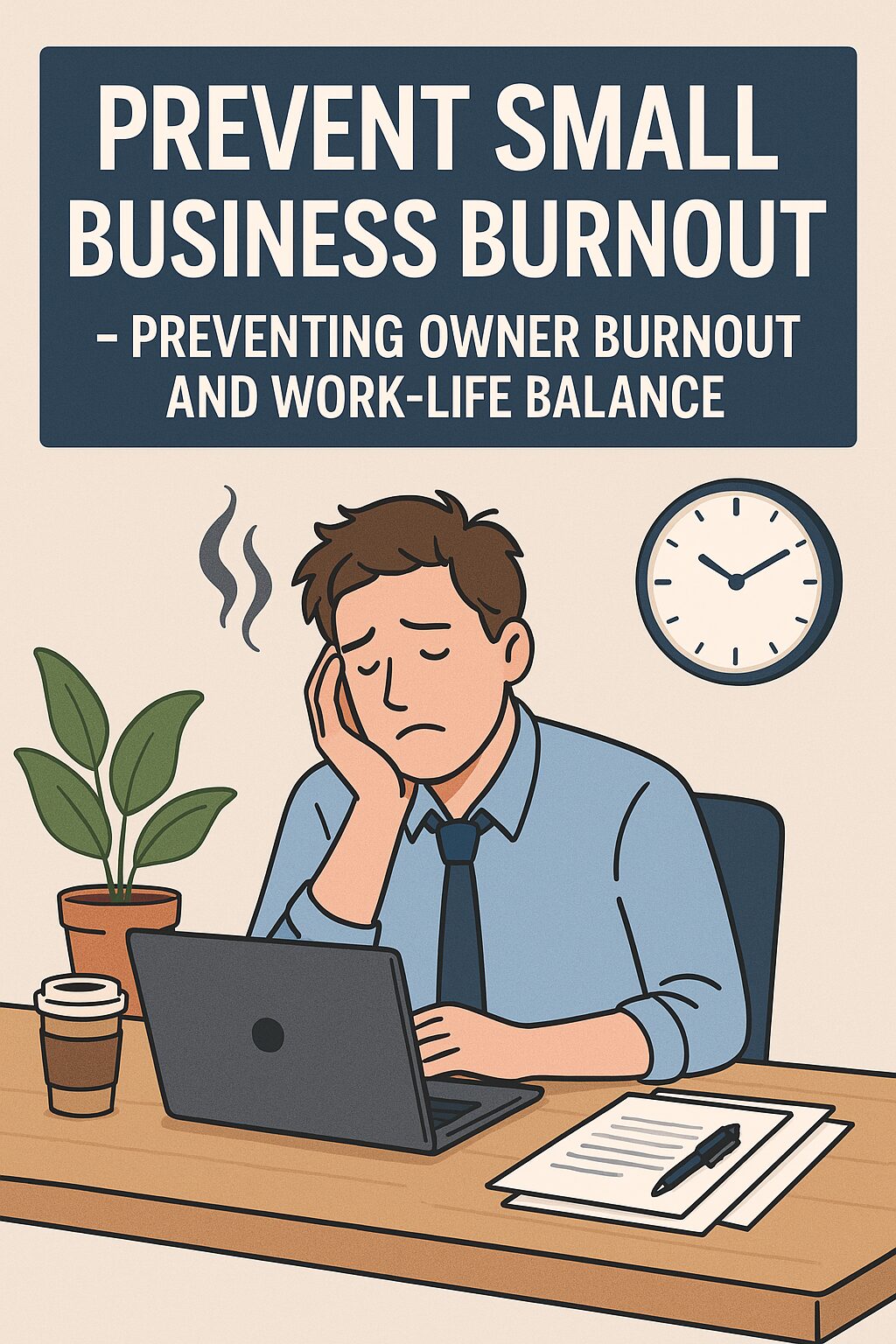
Entrepreneurial burnout rarely arrives unannounced; it sends subtle, persistent signals that are frequently rationalized as temporary or “just part of the job.” Cultivating self-awareness to detect these personal red flags is paramount. These signs manifest across physical, emotional, and behavioral dimensions, creating a compounding effect that erodes your capacity to lead effectively.
Common indicators include a state of chronic fatigue and emotional depletion that sleep doesn’t remedy, coupled with a growing cynicism or detachment from the venture you once loved. You may find yourself becoming increasingly irritable with clients, family, or staff, or experiencing a noticeable decline in cognitive performance, such as difficulty concentrating or making decisions. As noted by psychologist Christina Maslach, a pioneer in burnout research, a key component is “a sense of ineffectiveness and lack of accomplishment.” This often appears as a feeling that your efforts are futile, despite working longer hours with diminishing returns.
- Persistent exhaustion and sleep disturbances, regardless of rest.
- Loss of motivation and passion for projects that were once exciting.
- Increased anxiety, irritability, or a short temper with colleagues and family.
- Physical symptoms like frequent headaches, muscle tension, or a weakened immune system.
- Reliance on unhealthy coping mechanisms, such as increased caffeine or alcohol consumption.
Warning Signs Within Your Business Operations
The toll of burnout is not confined to the individual; it inevitably seeps into the enterprise’s operational fabric. Your business itself begins to exhibit symptoms that mirror your internal state. These organizational warning signs are critical to monitor, as they provide an objective measure of strain that can sometimes be easier to recognize than subjective feelings.
Operationally, a primary signal is a breakdown in systems and processes. Missed deadlines, declining product or service quality, and a chaotic work environment often reflect the leader’s diminished capacity for oversight. Financial metrics may show troubling trends, such as rising costs due to inefficiency or a plateau in growth. Furthermore, the culture of the business can sour. Employee morale may drop, turnover could increase, and innovation often stagnates. As leadership expert John C. Maxwell observes, “Everything rises and falls on leadership.” When the leader is depleted, the entire organization feels the gravitational pull.
The Impact of Ignoring the Signs
Disregarding these early warnings carries a steep, compounding cost. The consequences extend far beyond a few bad days, threatening the very foundation of the business and the owner’s long-term health. What begins as manageable stress can solidify into a debilitating condition with serious ramifications.
On a personal level, chronic burnout is a direct pathway to severe health issues, including clinical depression, cardiovascular problems, and a compromised immune system. Professionally, the quality of strategic decision-making erodes, leading to poor financial choices, damaged client relationships, and lost opportunities. The business suffers from a toxic cycle of reactivity, where the owner is constantly putting out fires instead of steering a clear course. This environment drives away talented employees and can permanently tarnish the company’s reputation. Ultimately, ignoring the signs doesn’t just risk business failure; it risks a profound personal and professional crisis that can take years to recover from. Recognizing these signals is not a sign of weakness, but the first, non-negotiable act of strategic leadership.
Building Sustainable Operational Systems
Recognizing the signs of burnout provides the crucial “why” to act, but lasting prevention requires the “how”—the deliberate construction of robust operational frameworks. What if the very architecture of your business could be designed to absorb pressure and distribute load? Moving beyond personal coping mechanisms, this involves embedding resilience into the company’s daily workflows. By systematizing operations, entrepreneurs transform their role from perpetual problem-solver to strategic overseer, creating an enterprise that can thrive without consuming its founder.
Automating and Delegating Routine Tasks
One of the most powerful shifts a business owner can make is redefining their relationship with time-consuming, repetitive work. The goal is to strategically offload tasks that do not require your unique expertise, freeing mental bandwidth for high-level strategy and growth. This requires a two-pronged approach: leveraging technology for automation and trusting team members or external partners with delegation.
Automation targets predictable, rule-based processes. Implementing tools for invoicing, social media scheduling, email marketing, and customer relationship management (CRM) can reclaim hours each week. For instance, setting up automated payment reminders improves cash flow without daily manual intervention. The key is to start small; identify one or two processes that cause consistent friction and seek a technological solution. As entrepreneur and author Tim Ferriss advocates in The 4-Hour Workweek, the aim is to “eliminate before you delegate, and automate before you hire.”
Delegation, however, addresses tasks that require human judgment but not necessarily your direct involvement. This begins with a clear audit of your weekly activities, categorizing them into what only you can do and what can be taught or assigned. Effective delegation is not abdication; it involves providing clear expectations, necessary resources, and constructive feedback. Outsourcing to virtual assistants for administrative work or using fractional CFO services for financial management are potent examples. The initial investment of time to train pays exponential dividends in sustainable capacity and reduced cognitive load.
Implementing Time and Project Management Tools
With routine tasks streamlined, attention must turn to managing the remaining workload effectively. Chaos is a catalyst for burnout, while clarity and structure are its antidotes. Implementing disciplined time and project management systems creates visibility, reduces overwhelm, and ensures that effort aligns with strategic priorities.
Adopting a project management platform like Asana, Trello, or Monday.com creates a single source of truth for all ongoing initiatives. These tools move tasks out of email inboxes and mental checklists into a visual, collaborative space. This transparency allows for realistic workload distribution, prevents duplication of effort, and provides a satisfying visual record of progress. For solo entrepreneurs, even a simple system like the Eisenhower Matrix—categorizing tasks by urgency and importance—can be transformative in focusing on what truly drives the business forward.
Equally critical is guarding your most valuable asset: focused work time. Techniques like time blocking, where specific hours are dedicated to deep work, meetings, and administrative tasks, prevent the reactive, fragmented days that lead to exhaustion. Tools like calendar applications with strict scheduling rules or focus apps like Freedom or Cold Turkey can defend these blocks. The principle, supported by research on context switching, is that protecting periods of uninterrupted concentration dramatically increases output quality and reduces the mental fatigue associated with constant task-shifting.
Setting Realistic Goals and Client Boundaries
Finally, the most elegant system will fail if it is burdened with unrealistic expectations. A sustainable operation requires calibrating ambition with capacity, both internally and in client relationships. This involves the courageous practice of setting and enforcing clear boundaries, which directly protects the operational systems you’ve built.
Internally, this means moving from a vague, aspirational to-do list to setting SMART (Specific, Measurable, Achievable, Relevant, Time-bound) goals. Overly ambitious targets are a direct path to frustration and a sense of inadequacy. By breaking large objectives into smaller, achievable milestones, you create a rhythm of accomplishment that fuels motivation rather than depleting it. Regularly reviewing these goals ensures they remain aligned with available resources and energy.
Externally, establishing firm client boundaries is non-negotiable. This includes defining clear scope in contracts, setting and communicating realistic timelines, and having a structured process for handling scope creep. It also means defining working hours and communication protocols—such as not answering emails after 6 PM or on weekends.
A study by the Harvard Business Review on professional services found that firms with strong scope management protocols reported significantly higher profitability and lower team stress. A client who respects your boundaries is a long-term partner; one who doesn’t may cost more in burnout than they provide in revenue. As leadership expert Brené Brown notes, “Daring to set boundaries is about having the courage to love ourselves, even when we risk disappointing others.” In business, this self-respect is the bedrock of a sustainable practice.
Prioritizing Founder and Team Well-being
Even the most meticulously designed operational systems can falter under the weight of a depleted human engine. What good are automated workflows if the people driving them are running on empty? Sustainable prevention, therefore, must extend beyond processes to address the human core of the enterprise. This final strategic pillar focuses on intentionally cultivating health and resilience, transforming well-being from a personal luxury into a foundational business asset.
The Role of Regular Time Off and Disconnecting
In a culture that often glorifies relentless hustle, strategic disengagement may seem counterintuitive. Yet, it is precisely this practice that replenishes the cognitive and creative reserves necessary for sound leadership. This subsection explores the non-negotiable importance of scheduled rest and the discipline of truly unplugging.
The concept of deliberate recovery is critical. Unlike passive downtime filled with work-related thoughts, true recovery involves activities that are mentally and physically restorative. Research consistently shows that taking regular vacations and fully disconnecting from work leads to improved productivity, enhanced creativity, and lower risk of cardiovascular disease. For the founder, this means scheduling time off in advance and treating it with the same immovability as a major client meeting. It also requires establishing clear “off-duty” protocols, such as setting auto-responders, delegating a point of contact, and physically removing work apps from personal devices during leave.
The benefits are not merely personal; they radiate throughout the organization. When leadership models healthy boundaries, it gives implicit permission for the team to do the same, reducing collective burnout risk. As Arianna Huffington, founder of Thrive Global, argues, “We think, mistakenly, that success is the result of the amount of time we put in at work, instead of the quality of time we put in.” The quality of that time is directly proportional to the quality of rest preceding it.
Fostering a Supportive Company Culture
A founder’s well-being is deeply intertwined with the health of their team’s environment. A culture of silent struggle and perpetual urgency is a breeding ground for collective exhaustion. Conversely, a supportive atmosphere acts as a buffer against stress. Here, we examine how to cultivate a culture where well-being is openly valued.
Building such a culture starts with psychological safety—the shared belief that one can speak up about challenges without fear of punishment. Leaders can foster this by openly discussing their own strategies for managing workload and stress, thereby destigmatizing the conversation. Practical policies are equally important. Consider implementing flexible working hours, recognizing and rewarding output rather than mere presence, and encouraging the use of paid time off without guilt.
- Conduct regular, anonymous pulse surveys to gauge team stress and engagement levels.
- Celebrate milestones and successes as a team, reinforcing shared purpose.
- Encourage peer support and mentorship programs within the company.
- Address conflicts and workloads proactively, rather than allowing them to fester.
This approach yields tangible business returns. A study by the Google-led initiative Project Aristotle found that psychological safety was the number one factor in high-performing teams. When employees feel supported, they exhibit greater engagement, innovation, and loyalty—directly reducing turnover costs and protecting the business from the operational instability caused by widespread burnout.
Integrating Wellness into the Business Model
The most forward-thinking strategy is to move beyond ad-hoc policies and embed wellness into the company’s very operating principles. This transforms it from a perk into a core value, with allocated resources and measurable outcomes. How can a small business structurally commit to the health of its people?
Begin by allocating a specific budget line for well-being initiatives. This could fund subscriptions to meditation apps like Calm or Headspace, provide ergonomic home office stipends, or offer subsidies for gym memberships or fitness classes. Furthermore, integrate wellness goals into strategic planning. Just as you set financial targets, set objectives for employee satisfaction scores or reductions in overtime hours. Lead by example: if you schedule a strategic planning retreat, also schedule a team activity focused purely on connection and fun.
This integration creates a powerful, self-reinforcing cycle. A team that is mentally and physically healthier is more resilient, collaborative, and productive. This leads to better business performance, which in turn provides more resources to reinvest in well-being initiatives. It marks the evolution from merely preventing small business burnout to proactively building an antifragile organization. In the words of Simon Sinek, “Customers will never love a company until the employees love it first.” By making well-being a strategic priority, you safeguard your most valuable asset—your people—and build a venture designed for long-term, sustainable success.
Strategic Planning for Long-Term Resilience
While operational systems and a culture of well-being address present-day pressures, true immunity from burnout requires a forward-looking lens. What separates a venture that merely survives from one that thrives through uncertainty? The answer lies in strategic planning that embeds resilience into the company’s DNA, ensuring it can withstand market shifts, personal challenges, and the inevitable stresses of growth without breaking its founder.
Financial Buffer: A Key to Prevent Small Business Burnout
Chronic financial anxiety is a potent accelerant for entrepreneurial exhaustion. When cash flow is perpetually tight, every decision carries existential weight, creating a state of constant, low-grade crisis. Constructing a robust financial safety net is therefore not just an accounting practice—it is a direct investment in mental peace and strategic freedom.
The cornerstone of this buffer is the establishment of an emergency cash reserve, often recommended to cover three to six months of operating expenses. This fund acts as a shock absorber for unexpected events, from economic downturns to key client losses, allowing for thoughtful response instead of panic-driven reactions. Furthermore, diligent cash flow management, including clear invoicing terms and proactive client payment follow-ups, prevents the “feast-or-famine” cycles that wreak havoc on stability. Tools like rolling cash flow forecasts provide visibility, turning financial management from a reactive guessing game into a proactive strategic function.
The psychological impact cannot be overstated. As financial educator and entrepreneur Ramit Sethi notes, “The single most important factor to getting rich is getting started, not being the smartest person in the room.” In the context of burnout prevention, “getting started” means building that foundational financial cushion. It transforms the founder’s mindset from one of scarcity to one of agency, reducing the decision fatigue associated with perpetual financial firefighting and creating the space needed for innovative, long-term thinking.
Continuous Learning and Adaptive Business Models
Another significant source of burnout is the feeling of being trapped on a hamster wheel, repeating the same tasks without growth or adaptation. Stagnation breeds cynicism, while evolution fosters engagement. Committing to continuous learning and building flexibility into your business model is a powerful antidote to this stagnation.
This involves dedicating time to strategic foresight—stepping back from daily operations to analyze market trends, emerging technologies, and competitive shifts. Schedule regular “innovation hours” to explore new tools or methodologies relevant to your industry. Encouraging and investing in skill development for yourself and your team, perhaps through online courses or industry conferences, ensures the business does not become obsolete. This proactive stance mitigates the reactive stress of being perpetually behind the curve.
Adaptability should be engineered into the business model itself. Consider the viability of diversified revenue streams or subscription-based services that provide predictable income. The pivot, a concept popularized by Eric Ries in The Lean Startup, is not a sign of failure but of intelligent adaptation. A business built with modular processes and a culture that experiments can adjust course without existential crisis. This inherent flexibility reduces the paralyzing fear of change and turns challenges into opportunities for reinvention, keeping the work intellectually stimulating and far from monotonous.
Building a Support Network to Prevent Small Business Burnout
Perhaps the most underestimated strategy is combating the profound isolation that often accompanies leadership. The myth of the lone visionary shouldering every burden is a direct path to depletion. Intentionally cultivating a diverse support network externalizes challenges and provides critical perspective, emotional sustenance, and practical advice.
This network should be multi-layered. Peer advisory groups or mastermind circles with other non-competing business owners create a confidential forum to share struggles and solutions. A formal board of advisors or a mentor with seasoned experience can offer strategic guidance and help navigate high-stakes decisions. Beyond professional circles, do not neglect the importance of personal support from friends, family, or a coach who understands the entrepreneurial journey.
- Professional Associations: Provide industry-specific insights and networking opportunities.
- Therapy or Executive Coaching: Offers tools for managing stress, improving communication, and leadership development.
- Online Communities: Can offer quick, crowd-sourced advice and a sense of shared experience.
The act of verbalizing challenges to a trusted confidant often clarifies solutions, while receiving validation normalizes the difficulties of entrepreneurship. As leadership expert Simon Sinek observes, “Leadership is not about being in charge. It is about taking care of those in your charge.” To effectively care for others, a leader must first allow themselves to be supported. This network becomes a strategic asset, a collective brain trust that fortifies the founder against the unique pressures that can otherwise lead to burnout.
Cultivating a Sustainable Foundation for Leadership
In summary, preventing entrepreneurial burnout is not an exercise in crisis management but a strategic imperative for business longevity. It requires moving from a reactive stance to a proactive philosophy that integrates self-awareness, systemic efficiency, holistic well-being, and forward-looking resilience. By recognizing early warnings, building robust operational frameworks, prioritizing human health, and planning for adaptability, business owners do more than safeguard their personal well-being. They architect an enterprise that is both productive and sustainable, capable of pursuing ambition without sacrificing the individual at its core. Ultimately, the most successful business strategy is one that ensures the leader, and the venture, can thrive for the long haul.