

This Simple Referral Strategy Will Transform Your Client Acquisition
Your best customers are sitting on a goldmine of growth potential, and they don’t even know it. While most small business owners exhaust themselves chasing new leads through expensive advertising and complex marketing funnels, the most powerful client acquisition tool remains hiding in plain sight within their existing customer relationships.
The psychology behind referral marketing reveals a fundamental truth about human behavior: people trust recommendations from friends, family, and colleagues more than any advertisement could ever achieve. This inherent trust factor creates a unique opportunity for businesses willing to systematically activate their referral potential rather than leaving word-of-mouth marketing to chance.
What makes this approach particularly compelling for resource-constrained businesses is its accessibility. Unlike sophisticated digital marketing campaigns that require significant budgets and technical expertise, an effective referral strategy leverages relationships you’ve already built through quality service and genuine value delivery.
The Hidden Psychology That Makes Referrals Irresistible
Understanding why referrals work so effectively requires exploring the psychological mechanisms that drive human decision-making. When someone receives a recommendation from a trusted source, they’re not just getting information about a product or service—they’re receiving social proof that reduces the perceived risk of making a purchasing decision.
The trust transfer phenomenon occurs when confidence in one person extends to their recommendations. Picture this scenario: imagine you’re searching for a reliable contractor to renovate your kitchen. You could spend hours researching online reviews and comparing websites, or you could ask your neighbor who recently completed a beautiful renovation. The neighbor’s endorsement carries immediate weight because you’ve witnessed the quality of their results and trust their judgment.
This psychological shortcut helps people navigate an overwhelming marketplace of choices. Rather than evaluating every option independently, they can rely on the filtering mechanism of trusted relationships to identify quality providers. For businesses, this represents an opportunity to bypass the typical customer acquisition challenges of building credibility from scratch with strangers.
The compound effect of referral marketing creates exponential growth potential that far exceeds linear advertising results. Each satisfied customer who makes referrals can potentially introduce multiple new customers, who then become referral sources themselves. This multiplication effect transforms individual transactions into sustainable growth engines.
Referral Strategies: Why Most Businesses Fail at Referral Generation
Despite the obvious advantages of referral-based growth, most businesses approach this strategy with a passive mindset that severely limits their results. The common mistake involves waiting for referrals to happen naturally rather than creating systematic processes that encourage and facilitate them.
The assumption trap catches many business owners who believe that satisfied customers will automatically share their positive experiences. While customer satisfaction provides the foundation for referrals, satisfaction alone doesn’t guarantee that customers will take action. People lead busy lives and may genuinely appreciate your service without thinking to recommend you to others unless prompted at the right moment.
Another critical error involves making referral requests feel transactional rather than relational. When businesses treat referrals as a mechanical process—asking for names and contact information immediately after completing a project—they miss the opportunity to create genuine connection around shared values and outcomes.
The timing of referral requests often determines their success or failure. Many businesses ask for referrals too early in the relationship, before trust has fully developed, or too late, when the positive experience has faded from the customer’s immediate memory. The optimal window exists when customers feel most grateful for the value they’ve received and most confident in recommending your services to others.
Fear of appearing pushy or desperate prevents many business owners from making referral requests altogether. This hesitancy stems from a misunderstanding of how referrals actually benefit all parties involved. When positioned correctly, referral requests offer customers the opportunity to help friends and colleagues access valuable solutions while strengthening their relationship with your business.
The Framework for Systematic Referral Success
Creating a successful referral strategy requires moving beyond random requests to develop a systematic approach that integrates seamlessly with your customer experience. The most effective referral programs focus on creating conditions where referrals feel natural and beneficial for everyone involved.
Foundation building starts with delivering exceptional value that exceeds customer expectations. This doesn’t necessarily mean providing expensive extras or dramatic surprises. Instead, it involves consistent execution of your core services combined with thoughtful touches that demonstrate genuine care for customer success. When customers feel truly served rather than simply satisfied, they develop the enthusiasm necessary to share their experience with others.
The referral-worthy experience encompasses every interaction customers have with your business, from initial contact through project completion and ongoing relationship maintenance. Each touchpoint represents an opportunity to reinforce the value proposition and build the emotional connection that motivates referrals.
Consider the difference between a contractor who completes a job on time and within budget versus one who also provides regular progress updates, maintains a clean worksite, and follows up to ensure complete satisfaction. Both deliver the contracted service, but the second approach creates the memorable experience that customers want to share with friends.
Strategic Timing: When and How to Ask
The art of referral generation lies in identifying the optimal moments when customers feel most compelled to share their positive experiences. These peak satisfaction moments occur naturally throughout the customer journey, but recognizing and leveraging them requires intentional attention to emotional cues and relationship dynamics.
The gratitude window opens when customers experience significant relief, achievement, or breakthrough as a result of your service. This might occur when a complex problem gets resolved, when results exceed expectations, or when your service enables them to achieve an important goal. During these moments, customers feel genuinely grateful and want to acknowledge the value they’ve received.
Rather than making direct referral requests during peak satisfaction moments, consider expressing curiosity about their experience and asking open-ended questions that invite sharing. Questions like “How has this solution impacted your daily operations?” or “What would you tell a colleague who was facing a similar challenge?” create natural opportunities for customers to articulate the value they’ve received.
The conversation flow that emerges from these questions often leads organically to referral opportunities. When customers describe the benefits they’ve experienced, they’re simultaneously rehearsing the testimonial they might share with others. This process helps them recognize the potential value of making referrals while giving you insights into how they prefer to communicate about your services.
Following up after project completion provides another strategic opportunity for referral generation. The key involves framing these conversations around continued value rather than transactional requests. Check-in calls that focus on long-term results and ongoing success create contexts where referral discussions feel natural and supportive.
Creating Referral Momentum Through Relationship Depth
Sustainable referral generation depends on developing relationships that extend beyond individual transactions to encompass genuine partnership and mutual success. This deeper level of engagement transforms customers into advocates who actively promote your business because they believe in your mission and values.
The partnership mindset shifts the dynamic from service provider and customer to collaborative problem-solving team. When businesses approach customer relationships with genuine interest in long-term success rather than short-term profit, they create the emotional foundation necessary for enthusiastic referrals.
This approach involves understanding customer goals that extend beyond the immediate project scope and positioning your services within the broader context of their success. Instead of simply delivering contracted work, you become invested in outcomes that matter to your customers’ businesses and personal objectives.
Regular value-added communication keeps your business top-of-mind when referral opportunities arise naturally in customers’ networks. This might include sharing relevant industry insights, introducing customers to useful resources, or checking in during seasonal business cycles when your services become particularly valuable.
The compound effect of relationship depth creates referral momentum that builds over time. As customers experience consistent value and genuine care, they develop confidence in recommending your services because they trust that their friends and colleagues will receive the same quality of attention and results.
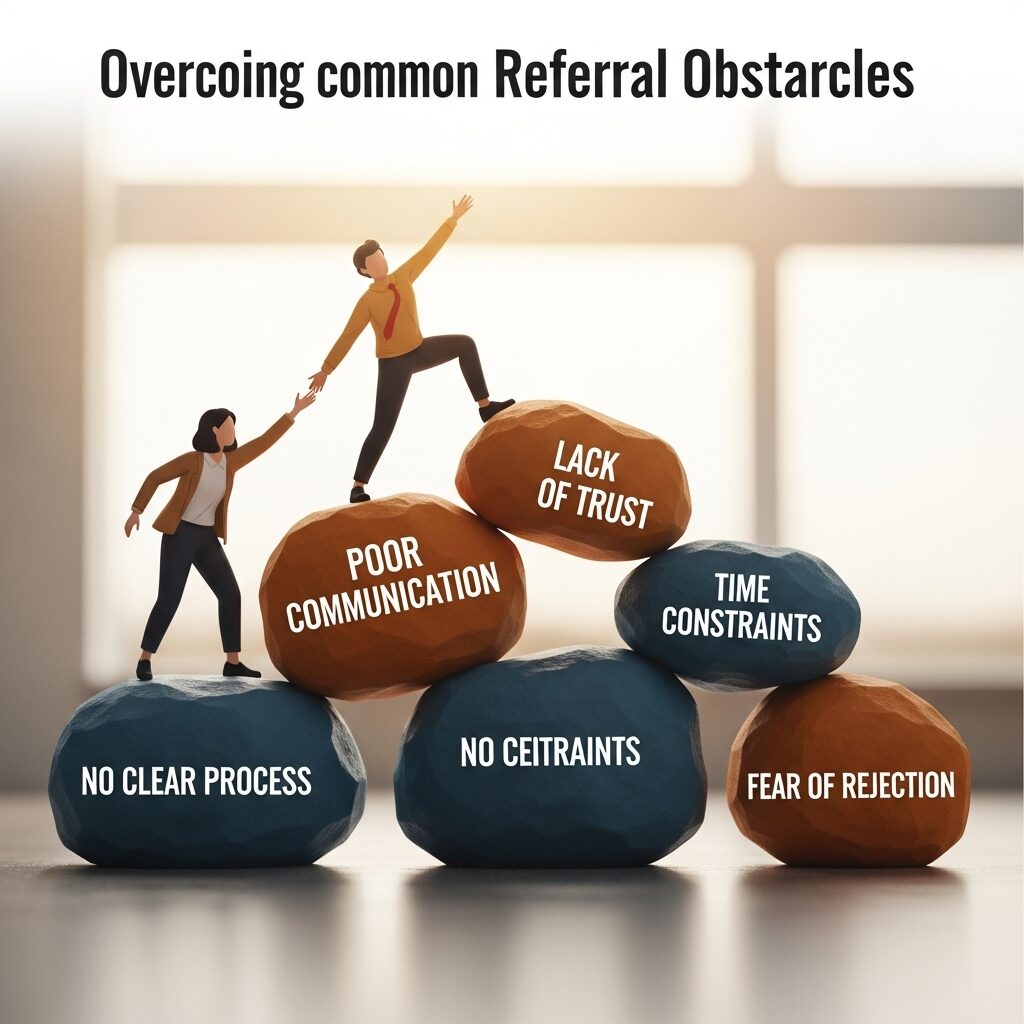
Overcoming Common Referral Obstacles
Even businesses with excellent customer relationships often encounter obstacles that prevent referral generation from reaching its full potential. Understanding these common challenges and developing strategies to address them systematically can dramatically improve referral results.
The specificity problem occurs when customers want to make referrals but don’t know exactly how to identify good prospects or make effective introductions. General requests for referrals often fail because customers can’t easily translate their positive experience into actionable recommendations for specific people in their network.
Providing customers with clear frameworks for identifying potential referrals helps overcome this obstacle. Rather than asking for referrals generally, help customers think through their network by discussing specific situations where your services would be valuable. This might involve asking about colleagues facing similar challenges, friends planning relevant projects, or business associates who could benefit from your expertise.
The introduction barrier prevents many potential referrals because customers feel uncertain about how to make introductions that serve everyone’s interests. Offering to facilitate introductions removes this obstacle while maintaining the personal connection that makes referrals effective. Simple approaches like providing email templates or offering to participate in introduction conversations can eliminate friction in the referral process.
Fear of disappointing friends prevents some customers from making referrals even when they’re completely satisfied with your services. This concern stems from the recognition that referrals create implicit responsibility for outcomes. Addressing this fear directly by discussing your commitment to customer satisfaction and outlining how you handle any potential issues can increase customer confidence in making referrals.
Activation Strategies That Actually Work
Moving from referral strategy to consistent results requires implementing specific activation techniques that create regular opportunities for referral generation without feeling forced or mechanical. The most successful approaches integrate naturally with existing customer communication and service delivery processes.
The story-sharing approach involves regularly sharing success stories with existing customers that highlight how your services have helped people in similar situations. These stories serve multiple purposes: they reinforce value for existing customers, provide examples of referral-worthy scenarios, and create natural opportunities for customers to share their own experiences.
When sharing success stories, focus on challenges, solutions, and outcomes that resonate with your customer’s experience and network. The goal isn’t to pressure customers into making referrals but to help them recognize situations where referrals would be genuinely valuable for everyone involved.
Regular check-ins focused on results and satisfaction create ongoing opportunities for referral conversations. Rather than limiting communication to project-related updates, schedule periodic conversations specifically designed to understand how customers are benefiting from your services and what challenges they’re observing in their industry or network.
These broader conversations often reveal referral opportunities naturally as customers describe colleagues or friends facing similar challenges. The key involves listening carefully for these cues and offering to help in ways that serve the customer’s relationship goals rather than just your business development needs.
Creating referral systems that reward relationship building rather than just transaction completion encourages customers to think beyond individual referrals to ongoing partnership in growth. This might involve inviting valued customers to participate in business development conversations, seeking their input on service improvements, or collaborating on industry content that showcases their expertise alongside your services.
Building Long-Term Referral Relationships
The most successful referral strategies create self-reinforcing cycles where satisfied customers become increasingly invested in your business success and actively seek opportunities to support your growth. This level of engagement requires moving beyond transactional referral requests to develop genuine partnerships based on mutual value and shared objectives.
The advocate development process involves gradually deepening relationships with customers who demonstrate referral potential and enthusiasm for your business. These relationships require careful nurturing over time, with consistent attention to their success and regular communication about industry developments that affect their business.
Customer advocates often emerge from relationships where you’ve solved significant problems or contributed meaningfully to important achievements. These customers understand the value of your services intimately and feel confident recommending you because they’ve experienced your capability firsthand.
Developing multiple advocate relationships creates referral resilience that doesn’t depend on any single customer for growth. This diversified approach also provides multiple perspectives on your market and service delivery, helping you identify improvement opportunities and new service possibilities.
The investment in advocate relationships pays dividends beyond direct referrals. These customers often provide valuable feedback, serve as references for prospects, and offer insights into market trends that inform business strategy. Their success becomes intertwined with yours, creating sustainable partnerships that benefit everyone involved.
Your Next Steps to Referral Success
Implementing an effective referral strategy doesn’t require massive changes to your business operations, but it does demand consistent attention to relationship building and systematic approach to referral generation. The key lies in starting with strong foundations and gradually developing more sophisticated activation techniques as you gain experience and confidence.
Begin by identifying customers who have expressed strong satisfaction with your services and seem genuinely enthusiastic about the results they’ve achieved. These early advocates provide the best starting point for referral conversations because they already have the emotional connection necessary to share their experience with others.
Focus on creating more referral-worthy experiences by examining every customer interaction and identifying opportunities to exceed expectations in small but meaningful ways. Remember that exceptional service doesn’t always require dramatic gestures—consistent attention to detail and genuine care for customer success often creates the most powerful referral motivation.
The transformation that occurs when you shift from hoping for referrals to systematically generating them extends far beyond immediate business growth. You’ll discover that the process of building referral relationships deepens customer satisfaction, provides valuable market insights, and creates a sustainable competitive advantage that compound over time.
Start today by reaching out to one satisfied customer and expressing genuine curiosity about their experience with your services. Ask how the results have impacted their business or personal objectives, and listen carefully for opportunities to support their success while exploring natural referral possibilities.
Your referral strategy begins with this single conversation, but it has the potential to transform how you think about customer relationships and business growth. The compound effect of systematic referral generation will surprise you with its power to create sustainable, relationship-based business development that aligns perfectly with your values and service philosophy.
Common Questions About Referral Strategy
What is a referral program and how does it work?
A referral program is a marketing strategy that encourages existing customers to refer new customers to a business in exchange for rewards or incentives. This approach leverages the trust and credibility that comes from personal recommendations, making it a powerful tool for attracting new business. A well-designed referral program can significantly enhance customer acquisition efforts and lead to a loyal customer base.
What are the benefits of referral marketing?
Referral marketing offers numerous benefits, including cost-effectiveness, increased customer loyalty, and higher conversion rates. By utilizing existing customers to promote your program, businesses can reduce traditional marketing expenses while simultaneously building a community around their product or service. Referred customers are often more likely to make purchases and become repeat buyers, thereby contributing to business growth.
How can I set up a referral program?
To set up a referral program, start by defining your goals and identifying your target audience. Next, choose the right referral incentives that will motivate customers to participate. You can then create a unique referral link for customers to share with their networks. Finally, promote your referral program through various channels to encourage participation and track its effectiveness using referral marketing software.
What are some effective referral marketing strategies?
Effective referral marketing strategies include offering compelling referral rewards, utilizing referral tracking tools, and creating engaging referral campaigns. Additionally, leveraging social media platforms and email newsletters can help in promoting your referral program. By continuously monitoring the results and adjusting your strategies, you can ensure the program remains effective and appealing to your customer base.
What is the difference between referral marketing and affiliate marketing?
Referral marketing and affiliate marketing both involve promoting products or services, but they differ in their approach and target audience. Referral marketing typically relies on existing customers to recommend a business to their friends and family, while affiliate marketing involves paying influencers or partners to promote a product in exchange for a commission on sales. Understanding these differences can help businesses choose the right strategy for their marketing efforts.
What are some referral program ideas for businesses?
Referral program ideas can vary widely based on your business model. Consider offering discounts or cash rewards for both the referrer and the referred customer. You could also implement a tiered rewards system, where customers earn greater incentives for referring more people. Creating limited-time referral campaigns or special promotions can also spark excitement and encourage participation.
How to turn your referral program into a successful B2B referral program?
To turn your referral program into a successful B2B referral program, focus on building strong relationships with existing clients and providing exceptional service. Offer exclusive rewards for referrals that lead to new business partnerships and utilize professional networks. Regularly engage with your clients through newsletters and updates about your referral program to keep it top of mind.
What is the role of referral marketing software in managing a referral program?
Referral marketing software plays a crucial role in managing and tracking the performance of your referral program. It can automate tasks such as generating unique referral links, tracking referrals, and managing rewards. Additionally, referral marketing software provides valuable insights and analytics, allowing businesses to measure the effectiveness of their marketing efforts and make data-driven decisions to enhance their referral strategies.
How can businesses promote their referral program effectively?
Businesses can promote their referral program effectively by utilizing multiple channels such as email marketing, social media campaigns, and website banners. Creating engaging content that highlights the benefits of referral rewards can also attract attention. Encouraging satisfied customers to share their experiences and providing easy-to-use referral links can further amplify your reach and participation in the program.