
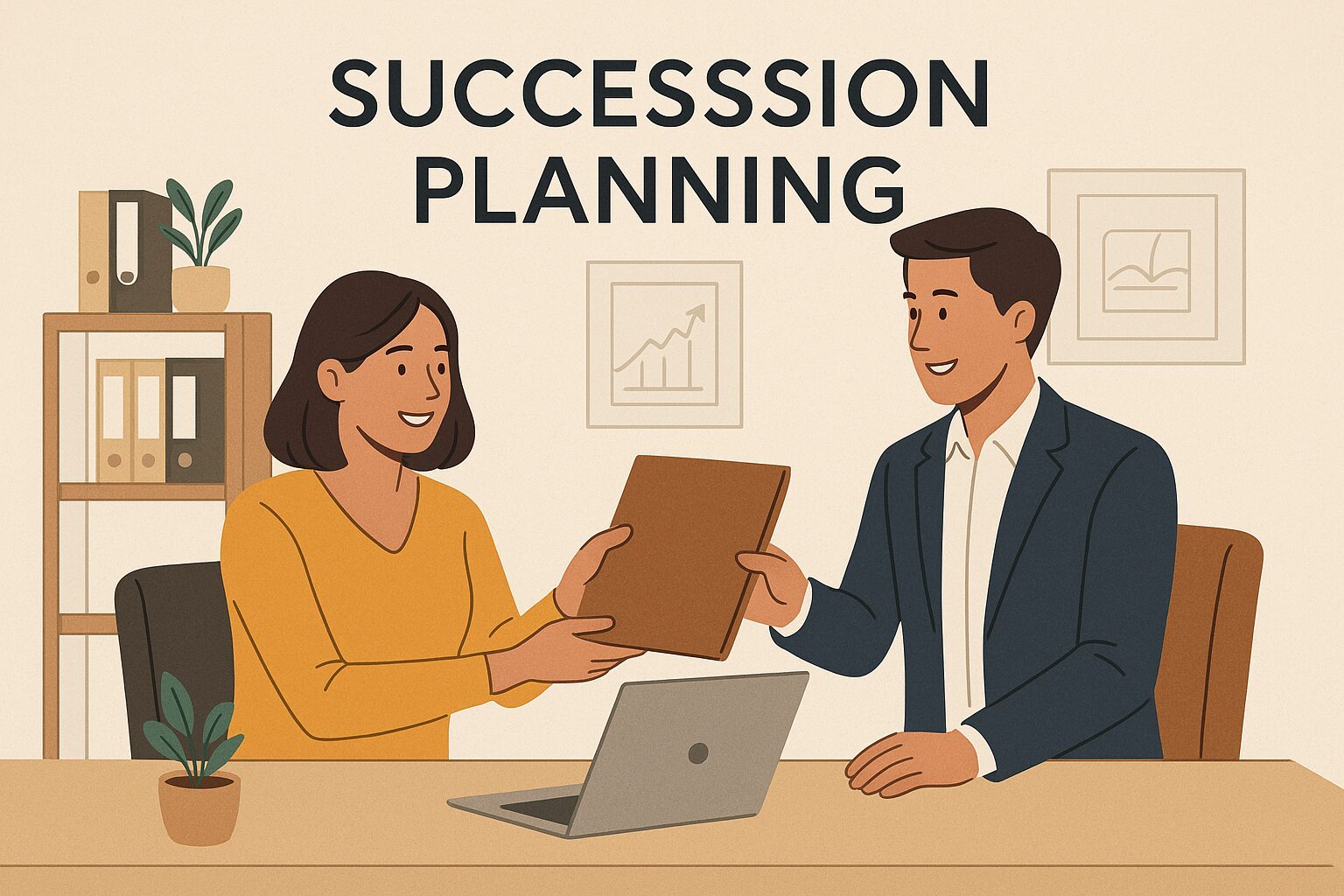
Succession Planning for Small Businesses: A Complete Guide to Business Transition
Succession planning represents one of the most critical yet frequently overlooked aspects of running a sustainable enterprise. For small business owners who have invested countless hours building their companies from the ground up, the thought of eventually stepping away can feel distant or uncomfortable.
However, developing a comprehensive business succession plan is essential for protecting the value you’ve created, ensuring your business can continue to thrive, and securing the financial future of everyone involved. Whether you’re planning to retire, pursue new ventures, or simply want to prepare for unexpected circumstances, having a succession plan in place provides clarity, reduces risks, and creates opportunities for a successful succession that benefits all stakeholders.
This guide explores the essential elements of succession planning for small businesses, offering practical strategies and best practices to help small business owners navigate this complex but rewarding process
What is a Business Succession Plan and Why Do Small Businesses Need One?
Defining a Succession Plan for Business Owners
A business succession plan is a strategic roadmap that outlines how ownership and leadership of a company will transition from the current business owner to a successor when the time comes for change. This comprehensive document addresses not only who will take over the business but also how the transition will occur, what timeline will be followed, and what steps are necessary to ensure a smooth transition. The succession planning process involves identifying potential succession candidates, establishing training and development protocols, determining valuation methods, and creating legal and financial frameworks that support the transfer of ownership and responsibility.
For small business owners, creating a succession plan means thinking critically about the future of the enterprise beyond their direct involvement, considering various scenarios including retirement, sale to external parties, family transfer, or management buyout arrangements. Unlike large corporations with extensive resources and dedicated succession management teams, many small businesses must approach this planning with limited personnel and expertise, making it all the more important to start early and develop a clear, actionable strategy.
The Critical Importance of Succession Planning Process for Small Businesses
The succession planning process holds particular significance for small businesses because these enterprises typically depend heavily on the knowledge, relationships, and leadership of the founding business owner. Many small business owners discover too late that without a business succession plan in place, their life’s work may lose substantial value or fail entirely during an unplanned transition. Statistics reveal that many small businesses never make it to the second generation, often because proper succession planning for small businesses was never implemented.
Having a small business succession plan in place provides multiple benefits: it ensures your business can continue operating smoothly regardless of unforeseen circumstances, it maximizes the company’s value when you’re ready to sell your business or transfer ownership, and it provides peace of mind knowing that employees, customers, and family members who depend on the enterprise will be protected.
Furthermore, the planning process itself often reveals operational weaknesses, succession candidates with untapped potential, and strategic opportunities that might otherwise remain hidden. When small business owners create a plan for transition early in their tenure, they give themselves time to develop leaders internally, build systems that don’t depend solely on the owner’s presence, and position the company as an attractive investment for potential buyers or successors.
Common Risks of Operating Without a Small Business Succession Plan
Operating without a small business transition strategy exposes entrepreneurs to numerous risks that can devastate both personal finances and the enterprise itself. Many small businesses face the possibility of forced liquidation at unfavorable terms when an owner becomes suddenly unable to continue due to health issues, disability, or death. Without a qualified successor identified and prepared, key employees may leave for more stable opportunities, critical customer relationships may deteriorate, and the business value can decline precipitously in a matter of months.
Additionally, the absence of proper succession planning can create family conflicts when multiple relatives have different expectations about inheritance or leadership roles, potentially destroying both relationships and business value simultaneously. For those hoping to sell their business as part of retirement planning, the lack of documentation, systematized operations, and developed leadership can reduce sale prices significantly or make the business essentially unsaleable. Tax consequences represent another major risk, as improper transition structures can result in unnecessary tax burdens that consume a substantial portion of the business’s value.
Perhaps most tragically, many small business owners who spent decades building their enterprises find themselves unable to retire because they never created the conditions necessary for a successful succession, forcing them to continue working long past their desired exit date or to close businesses that could have continued thriving under new leadership.
How to Create a Business Succession Plan: The Complete Succession Planning Process
Assessing Your Business Needs and Current Situation
The first step in creating a succession plan involves conducting an honest assessment of your business’s current situation and future needs. Small business owners should begin by articulating their personal goals for the transition, including desired timeline, financial requirements for retirement or next ventures, and preferences regarding who should lead the company forward.
This assessment should include a thorough evaluation of the business’s financial health, operational dependencies, competitive position, and growth potential. Understanding what makes your business valuable and which elements depend most heavily on your personal involvement helps identify areas requiring attention before any transition can occur.
Many small businesses discover during this phase that significant work is needed to ensure your business can function independently of the founder’s daily presence. The assessment should also inventory potential succession candidates within the organization, evaluating their capabilities, interests, and readiness to assume greater responsibility.
For family-owned businesses, this stage requires particularly candid conversations about which family members have genuine interest and aptitude for leadership versus those who might expect involvement based solely on relationship. External factors such as market conditions, industry trends, and the competitive landscape should also be considered, as these elements influence both the optimal timing for transition and the strategies most likely to ensure a smooth transition and preserve business value.
Using a Succession Planning Template to Structure Your Strategy
A succession planning template provides valuable structure to help small business owners organize their thoughts and create a plan that addresses all critical components systematically.
While each business succession plan must be customized to reflect unique circumstances, effective templates typically include sections addressing leadership transition timelines, successor identification and development plans, ownership transfer mechanisms, valuation methodologies, financing arrangements, legal documentation requirements, and contingency protocols for unexpected events. Using a succession planning template helps ensure that no important elements are overlooked and provides a framework for discussions with family members, key employees, advisors, and potential succession candidates.
The template should prompt business owners to document not only the formal structures of transition but also the tacit knowledge and relationships that contribute to business success but might not be immediately obvious to a successor. Many small business owners find that working through a comprehensive template reveals gaps in their current operations or succession readiness that require attention well before any actual transition occurs.
The planning document created from this template becomes a living resource that should be reviewed and updated regularly as circumstances change, the business evolves, and succession candidates develop their capabilities. For those planning to sell their business to external parties, the succession planning template should incorporate marketing strategies, business broker engagement plans, and purchase agreement considerations that will facilitate selling the business at optimal value.
Identifying and Developing a Qualified Successor
Identifying and preparing a qualified successor represents perhaps the most crucial element of the succession planning process, yet it’s an area where many small businesses struggle significantly. The ideal successor possesses not only technical competence and leadership ability but also shares values consistent with the company culture and demonstrates commitment to continuing the business’s mission and supporting its stakeholders. F
or some small business owners, a family member represents the natural successor, while others may look to key employees, management teams, or external candidates who bring fresh perspectives and capabilities. The identification process should be transparent and merit-based whenever possible, with clear criteria established for what qualifies someone to lead the organization forward. Once potential succession candidates have been identified, developing their capabilities becomes a multi-year priority. This development process should include progressively increasing responsibilities, mentoring relationships with the current owner, exposure to all aspects of business operations, relationship-building with key customers and suppliers, and decision-making authority that allows the successor to develop confidence and demonstrate capability.
Many small business owners find that creating a succession plan with a defined development pathway not only prepares the successor but also helps the business by reducing owner dependency and building organizational resilience. For businesses without obvious internal succession candidates, this reality may indicate that selling the business to external buyers represents the most viable path, requiring a different but equally important planning process to help the business achieve maximum value in a sale transaction.
What Are the Best Practices for Business Succession Planning Strategy in Family Businesses?
Unique Challenges of Transition in Family-Owned Enterprises
Family businesses face distinctive challenges in the succession planning process that differ substantially from non-family enterprises. The intersection of family dynamics, business needs, and financial considerations creates complexity that requires careful navigation to achieve a successful succession. Many small businesses that are family-owned must balance competing interests among family members who may have different levels of involvement in operations, varying capabilities, and diverse expectations about inheritance and leadership opportunities.
The emotional dimensions of family relationships can complicate objective assessment of succession candidates, sometimes leading to selections based on family position rather than qualifications and commitment. Additionally, family businesses often struggle with the founder’s difficulty in letting go, as the business represents not just a financial asset but also identity, legacy, and family cohesion. These enterprises must address questions about whether all children should receive equal ownership regardless of their involvement in operations, how to compensate active family members fairly while respecting inactive family shareholders, and how to create governance structures that allow the business to continue thriving across generations.
The small business transition in family contexts also raises concerns about maintaining family harmony, as business disagreements can damage personal relationships and create lasting rifts that extend far beyond the workplace. Best practices suggest that family businesses benefit from establishing clear policies regarding family employment, advancement criteria, and conflict resolution mechanisms well before succession planning becomes urgent.
Balancing Family Dynamics with Business Succession Plan Requirements
Developing a business succession plan in place for family enterprises requires balancing emotional considerations with business realities to ensure both family harmony and organizational sustainability.
Successful family business owners recognize that loving all children equally doesn’t necessarily mean treating them identically in business succession arrangements. Creating a succession plan for family businesses often involves difficult conversations about competency, interest, and fit, acknowledging that the family member best suited to lead the business forward may not be the oldest child or even the one most interested in ownership. Many small businesses implement solutions such as buying out uninvolved family members, creating different classes of stock that separate voting control from economic benefits, or establishing trusts and other structures that provide financial benefits to all heirs while concentrating operational authority with those actively managing the enterprise.
The succession planning template for family businesses should specifically address governance mechanisms such as family councils, shareholder agreements, and employment policies that help separate family relationships from business decisions. Transparency in the planning process helps manage expectations and reduces the likelihood of surprises that could trigger family conflict. Engaging external advisors, including attorneys, accountants, and family business consultants, provides objective perspectives that help the business owner make decisions based on what will truly help the business thrive rather than what might temporarily avoid family discomfort. These advisors can also facilitate difficult conversations and help family members understand the reasoning behind succession decisions, even when those decisions disappoint some family members.
Planning Can Help Preserve Both Relationships and Business Value
While family business succession presents unique challenges, proactive planning can help preserve both family relationships and business value when approached thoughtfully and systematically.
The key is starting the succession planning process early enough that decisions can be made deliberately rather than under crisis pressure, allowing time for successors to develop capabilities, family members to adjust expectations, and structures to be implemented that serve everyone’s interests. Many small business owners find that involving the entire family in discussions about business strategy and succession creates shared understanding even among those who won’t assume leadership roles.
This inclusive approach helps ensure a smooth transition by building support for the succession plan rather than resistance born of feeling excluded or undervalued. Creating a succession plan that clearly articulates the reasoning behind decisions, the criteria used to evaluate succession candidates, and the mechanisms that will provide fair value to all stakeholders reduces ambiguity and the misunderstandings that often fuel family conflicts. For family businesses where no family member is qualified or interested in leading the company forward, recognizing this reality early allows the family to explore alternatives such as professional management, employee ownership structures, or selling the business to external parties while family members retain ownership stakes.
In many cases, proper succession planning actually strengthens family bonds by removing uncertainty, demonstrating respect for all family members’ interests, and creating a shared vision for how the business legacy will continue to benefit the family for generations. The succession management process, though sometimes uncomfortable, ultimately provides the clarity and structure that allow families to separate business decisions from personal relationships, ensuring both can flourish.

When Should a Business Owner Work with a Business Broker for Transition Planning?
Understanding the Role of Business Brokers in Succession Planning
A business broker can play a valuable role in the succession planning process, particularly when a business owner is considering selling the business to external parties rather than transitioning to internal successors. Business brokers specialize in connecting sellers with qualified buyers, managing the sales process, and negotiating terms that maximize value for the departing owner.
For many small business owners who lack experience in selling a business, a professional broker provides expertise in valuation, marketing, buyer qualification, and transaction structuring that would be difficult to replicate independently. Brokers maintain networks of potential buyers and understand how to position businesses attractively to appeal to various buyer types, from individual entrepreneurs to strategic acquirers and private equity firms. They also provide a buffer between the seller and potential buyers, managing inquiries and negotiations in ways that protect confidentiality and maintain business operations during the sales process.
However, business brokers aren’t appropriate for every situation. Their services typically make most sense when the business owner has definitively decided to sell their business completely rather than maintain any ongoing involvement, when there’s no qualified internal successor available or interested, and when the business has reached a size and profitability level that will attract external buyers. For smaller enterprises or those with unique characteristics that limit marketability, the cost of broker services may exceed the value they provide. The decision to work with a business broker should be made as part of the broader business succession planning strategy, considering how an external sale compares to other transition options and whether the business is truly ready for marketing to potential purchasers.
Valuation and Market Analysis for Your Small Business Succession Plan
Whether working with a business broker or planning an internal transition, understanding your business’s current market value is essential to creating a succession plan that achieves your financial goals. Many small businesses operate for years without formal valuation, leaving owners uncertain about what their enterprises are actually worth and whether this value will support their retirement or next chapter. Professional business valuation considers multiple factors including historical financial performance, growth trends, customer concentration, competitive advantages, industry multiples, asset values, and the degree to which the business depends on the current owner’s continued involvement.
For those planning to sell their business, this valuation provides the foundation for setting asking prices and negotiating with potential buyers. For internal transitions, valuation determines the purchase price that successors must finance and helps structure transactions in ways that are fair to all parties. Many small business owners discover during valuation that their businesses are worth significantly less than anticipated, often because operations are too dependent on the owner’s personal relationships and expertise, financial records are incomplete, customer bases are too concentrated, or systems and processes are inadequately documented.
This reality, while disappointing, actually represents valuable information that can help the business owner focus efforts on activities that will increase value before any transition occurs. Market analysis complements valuation by providing context about buyer demand, typical transaction structures in the industry, and the competitive landscape for similar businesses. This analysis helps ensure your business stands out to potential succession candidates or buyers and informs the succession planning template regarding realistic timelines and expectations for transition outcomes.
Comparing Internal Succession Versus External Sale Options
One of the most fundamental decisions in developing a business succession plan in place involves choosing between internal succession to existing team members or family and external sale to outside buyers. Each approach offers distinct advantages and challenges that small business owners must weigh against their personal goals, the business’s circumstances, and the interests of stakeholders who depend on the enterprise. Internal succession, whether to family members or key employees, often provides greater continuity for customers and staff, maintains the business culture and values the owner has cultivated, and allows for gradual transition with the owner potentially remaining involved in advisory capacities.
This approach also frequently generates strong emotional satisfaction for business owners who take pride in developing successors and knowing their legacy will continue under familiar stewardship. However, internal succession typically requires longer timelines to prepare succession candidates, may generate lower financial returns than external sales since internal buyers often have limited capital, and can create complications if the successor ultimately doesn’t perform as expected. Selling the business to external parties, conversely, usually maximizes financial value, creates clean breaks that allow owners to fully move on to new chapters, and brings fresh perspectives and resources that may actually strengthen the business’s future prospects.
The challenges of external sales include less control over how the business evolves after transition, potential disruption to staff and culture, and the complexity of identifying qualified buyers and negotiating acceptable terms. Many small businesses ultimately choose hybrid approaches, such as selling to management teams with seller financing, implementing employee stock ownership plans, or selling to strategic buyers with earn-out arrangements that keep the original owner involved during transition periods. The optimal choice depends on the business owner’s priorities, the availability and capabilities of internal succession candidates, market conditions that affect buyer interest and valuations, and the specific characteristics that make your business attractive to different types of successors.
What Are Essential Succession Planning Tips and Best Practices for Implementation?
Timeline Considerations: When to Start Your Business Succession Plan
One of the most common mistakes many small business owners make involves delaying succession planning until circumstances force urgent action, leaving inadequate time for thorough preparation and optimal outcomes. Best practices strongly recommend that business owners create a plan for transition as early as possible, ideally beginning serious succession planning at least five to ten years before the anticipated transition date.
This extended timeline allows sufficient opportunity to identify and develop succession candidates, implement systems that reduce owner dependency, address weaknesses that diminish business value, and structure legal and financial arrangements properly. For younger entrepreneurs, establishing a basic succession plan even in the early years of business operation provides protection against unexpected events while creating a framework that can be refined as circumstances evolve. The succession planning process should be viewed not as a one-time project but as an ongoing management priority that receives regular attention throughout the business’s lifecycle.
Many small businesses benefit from establishing specific milestones in their succession planning timeline, such as completing formal valuation by a certain date, identifying primary and backup succession candidates within a defined period, implementing specific operational improvements annually, and conducting formal succession plan reviews at regular intervals. Starting early also provides psychological benefits, allowing the business owner to approach transition as a positive next chapter rather than an ending to be resisted or feared.
This perspective shift often helps the business owner make decisions that genuinely ensure your business is positioned for long-term success rather than unconsciously sabotaging transition efforts. For family businesses, early planning provides time for the next generation to gain education and experience, for family members to have honest conversations about interests and capabilities, and for structures to be implemented that help small businesses successfully navigate the complex dynamics of family ownership across generations. 
Legal and Financial Structures That Support Smooth Transition
Implementing appropriate legal and financial structures forms a critical component of any comprehensive small business succession plan, providing the framework within which ownership and leadership can transfer efficiently while minimizing tax consequences and legal complications.
Key legal documents that ensure a smooth transition include updated buy-sell agreements that specify how ownership interests can be transferred and at what valuations, shareholder or operating agreements that govern decision-making and resolve potential disputes, powers of attorney and other incapacity planning documents that enable business continuity if the owner becomes unable to act, and estate planning instruments such as trusts that facilitate wealth transfer according to the owner’s wishes.
Many small business owners should work with attorneys who specialize in business succession to ensure these documents are properly drafted and coordinated with each other. On the financial side, succession planning often requires creative structuring to balance the departing owner’s need for retirement capital with the successor’s ability to finance the purchase.
Options include seller financing arrangements where the business owner receives payments over time rather than a lump sum, earn-out provisions that tie portions of the purchase price to future business performance, and leveraged buyout structures where the business’s cash flow services acquisition debt.
For family transitions, financial planning might involve gifting strategies that transfer ownership gradually while minimizing estate and gift taxes, or creating different share classes that allow parents to transfer economic benefits to all children while concentrating voting control with the active successor. Insurance products, particularly life insurance and disability coverage, often play important roles in funding succession plans, providing liquidity to complete transitions if the business owner dies or becomes incapacitated before planned transfer dates.
Business owners should also consider how the chosen succession structure affects the business’s ongoing operations, ensuring that financing obligations don’t constrain the successor’s ability to invest in growth or that ownership divisions don’t create decision-making paralysis.
How Succession Planning Can Help Maximize Business Value
Beyond ensuring continuity, strategic succession planning can help maximize your business’s value substantially, often increasing sale prices or transition values by significant percentages compared to businesses without proper planning. The process of creating a succession plan forces business owners to view their enterprises through potential buyers’ or successors’ eyes, identifying and addressing weaknesses that diminish value.
Many small businesses discover that succession planning drives valuable improvements such as documenting systems and processes that previously existed only in the owner’s mind, diversifying customer bases to reduce concentration risk, developing management teams that can operate independently, strengthening financial controls and reporting, and building competitive advantages that differentiate the business in its market.
These improvements not only make the business more attractive to succession candidates or buyers but also typically improve current operational performance and profitability. Succession planning also creates opportunities to position the business strategically within its industry, perhaps pursuing acquisitions that increase scale, expanding into adjacent markets that enhance growth prospects, or developing intellectual property and proprietary systems that create defensible competitive positions.
For those planning to sell their business, proper succession planning ensures the company can be presented to potential buyers with comprehensive documentation, clean financial records, resolved legal issues, and clear growth narratives that command premium valuations. The timeline inherent in thoughtful succession planning allows business owners to be strategic about transition timing, choosing to execute transitions when market conditions are favorable, industry multiples are attractive, and the business’s performance trajectory is strong.
This contrasts sharply with forced sales during economic downturns or following personal crises when valuations are depressed and negotiating leverage is weak. Ultimately, viewing succession planning not merely as exit preparation but as a value-building strategy helps small business owners maintain motivation for the planning process while ensuring your business achieves its full potential regardless of when transition ultimately occurs.
What Succession Planning Template and Tools Can Small Business Owners Use?
Key Components Every Business Succession Plan Should Include
A comprehensive business succession plan in place should address multiple dimensions of transition, creating a roadmap that guides the process from initial preparation through final ownership transfer and beyond. Essential components include an executive summary that articulates the business owner’s transition goals, preferred timeline, and overall strategy for succession. The plan should include detailed successor profiles identifying who will assume leadership, their qualifications and development needs, and the process through which they were selected.
Financial projections should demonstrate how the transition will be funded, what the business valuation is based on, and how payments or distributions will be structured over time. Many small businesses include operational transition plans that specify how key responsibilities will be transferred, how customer and supplier relationships will be maintained, and what role if any the departing owner will play during and after the transition period. Legal and tax considerations should be thoroughly documented, including the structures that will be employed, anticipated tax consequences, and regulatory requirements that must be satisfied.
Risk management sections should address contingencies for unexpected events such as the owner’s sudden death or disability, the identified successor’s departure, or significant business disruption during transition. For family businesses, the succession planning template should explicitly address how family governance will evolve, how non-active family members will be treated, and what mechanisms exist for resolving family conflicts related to business matters.
Communication plans represent another critical component, specifying when and how various stakeholders including employees, customers, suppliers, and community partners will be informed about succession plans. Finally, effective succession plans include implementation timelines with specific milestones, responsible parties for each action item, and regular review schedules to help the business owner track progress and adjust plans as circumstances change.
Documenting Leadership Transition and Knowledge Transfer
Creating a succession plan requires extensive documentation of the tacit knowledge, relationships, and leadership practices that contribute to business success but might not be immediately apparent to a successor. Many small business owners possess decades of accumulated expertise about customer preferences, supplier capabilities, competitive dynamics, and operational nuances that have never been formally recorded.
The succession planning process should include systematic knowledge transfer activities such as documented standard operating procedures for all critical business functions, relationship maps that identify key contacts and the history of important business relationships, decision-making frameworks that explain how the current owner evaluates opportunities and risks, and recorded explanations of past successes and failures that provide learning for future leaders.
Some business owners create video or audio recordings discussing various aspects of business strategy and operations, providing successors with resources they can reference long after transition occurs. The knowledge transfer process should be structured and progressive, beginning with exposure to straightforward operational matters and advancing to more complex strategic and relationship-based elements as succession candidates develop. Many small businesses implement job shadowing programs, co-management periods where the owner and successor work closely together, and graduated authority structures that allow successors to make increasingly significant decisions while the owner remains available for guidance.
Documentation should also capture the business owner’s vision for the company’s future, core values that should guide decision-making, and cultural elements that contribute to organizational effectiveness. This knowledge transfer represents one of the most time-intensive aspects of succession planning, yet it’s often what determines whether transitions result in successful succession or disappointing performance declines. For businesses considering selling the business to external parties, comprehensive documentation dramatically increases value by demonstrating that the enterprise doesn’t depend entirely on the current owner’s continued involvement, making it far more attractive to potential buyers and justifying higher purchase prices.
Measuring and Updating Your Succession Planning Process Over Time
Developing a business succession plan in place is not a one-time project but rather an ongoing process that requires regular review, measurement, and updating to remain relevant and effective. Best practices recommend that small business owners conduct formal succession plan reviews at least annually, assessing progress against established timelines, evaluating whether identified succession candidates are developing as expected, and adjusting strategies in response to changing business conditions or personal circumstances.
These reviews should examine specific metrics such as the successor’s performance in progressively responsible roles, the business’s financial trajectory and how it compares to projections in the succession plan, the degree to which operational systems have been documented and owner-dependency reduced, and the current business valuation relative to the owner’s financial requirements for transition.
Many small businesses benefit from establishing key performance indicators specifically related to succession readiness, such as the percentage of critical processes that are documented, the successor’s demonstrated capability across different business functions, customer retention rates as the successor assumes greater visibility, and the business’s ability to operate successfully during the owner’s planned absences. Regular updating is essential because circumstances inevitably change in ways that affect succession planning.
Market conditions shift, affecting business valuations and buyer interest. Identified succession candidates may develop differently than anticipated, exceeding expectations or revealing limitations that require adjusting plans. Family situations evolve, with children’s career paths diverging from initial expectations.
The business owner’s own goals and timeline preferences may change as retirement approaches or personal circumstances shift. Regulatory and tax environments change, potentially requiring different legal and financial structures than originally planned. By treating succession planning as a dynamic process rather than a static document, business owners ensure their plans remain viable and can actually help small businesses achieve successful transitions when the time arrives. This ongoing attention also maintains focus on succession as a management priority, preventing the plan from becoming merely a filed document that provides false comfort without genuine preparation for transition.