

Photographic excellence involves more than sharp focus and flattering light. Photography is an art form that blends technical control with observation and intent. The strongest images are usually the result of deliberate choices: what to include, what to exclude, where to stand, and when to press the shutter. Train yourself to notice shape, texture, gesture, and small details that others overlook, then use technique to present them clearly. Follow these tips to create more distinctive, purposeful photographs.
Decide what the picture is truly about. High-quality images typically emphasize one primary subject or idea. Before you shoot, identify the focal point—an expression, a pattern of shadows, a color contrast, or a key action—and compose around it so the viewer’s eye knows where to land. Avoid trying to show everything at once; crowded frames dilute impact and can make even interesting scenes feel confusing.
If you need to convey an overview, tell the story with a short series rather than forcing every detail into one frame. For example, capture a wide establishing shot, a medium shot that shows context, and a close-up that highlights texture or emotion. This approach often produces a stronger narrative and gives you options when selecting your best image.
TIP! When starting out in photography, keep your camera settings simple. Learn one control at a time—such as shutter speed, aperture, or ISO—so you understand how it affects exposure and motion. Many beginners benefit from using Aperture Priority to practice depth of field, or Shutter Priority to freeze or blur movement, while leaving the other settings on automatic.
Developing Style Through Intentional Composition
Experiment to develop a personal style. Strong photography has a point of view. Explore new ways to use your camera and look for perspectives that feel intentional rather than habitual. Move closer, change your height, or try shooting through foreground elements (a doorway, branches, a window) to add depth. Consider how different focal lengths shape a scene: wide angles can emphasize space and leading lines, while longer lenses can simplify backgrounds and isolate your subject.
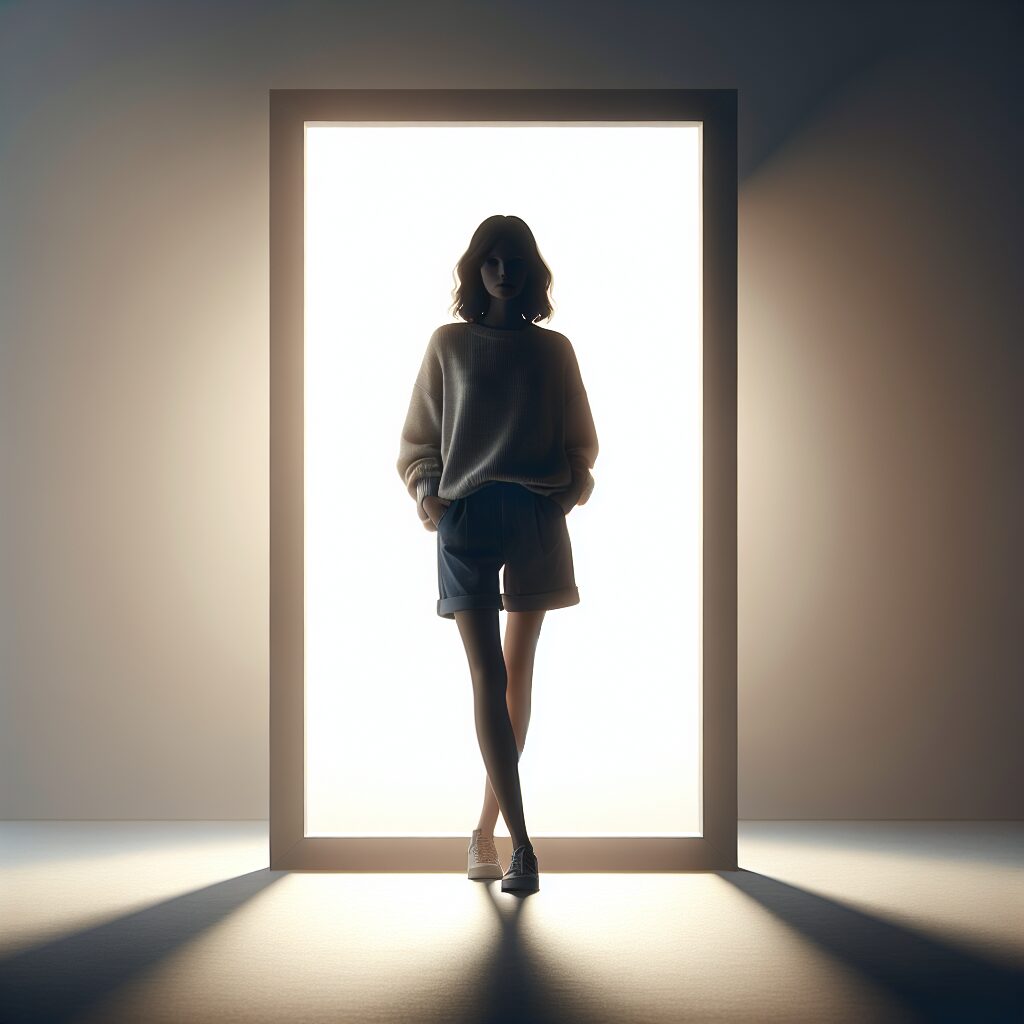
Rather than relying on “classic” postcard compositions, aim for images that reveal something specific about your subject. Try photographing the same scene at different times of day to compare the quality of light, or work with a single constraint—such as photographing only reflections or only one color—to push your creativity. If you want a practical reference for composing with intention, the Adobe rule-of-thirds guide offers clear examples and can help you make more deliberate framing choices.
Composition is not about how many elements you can fit into a frame. Negative space is a powerful tool that can emphasize your subject and create a cleaner, more refined image. Instead of cluttering a scene, simplify: remove distractions, change your angle, or zoom in to isolate the most meaningful detail. Techniques such as the rule of thirds, leading lines, and framing can add structure, but simplicity often creates the most elegant results.
TIP! Be intentional with color, focus, angles, and lighting. A high-quality photograph does not require an unusual subject; it requires clear choices that support the mood and message.
Imposing limits can also strengthen creativity. Choose a single theme (such as reflections, doorways, or hands at work) and build a series around it. Alternatively, commit to photographing one room from 100 different perspectives, varying focal length, height, and orientation. Constraints force you to look more carefully and discover compositions you might otherwise overlook.
Choosing and Using a DSLR Camera
If you want to progress toward more accomplished photography, consider moving up to a DSLR (digital single-lens reflex) camera. A DSLR uses an optical viewfinder through the lens for precise framing, and most modern models also offer live view on the rear screen for immediate review. While a full-frame DSLR can provide strong low-light performance, wider dynamic range, and shallower depth of field, it is not mandatory for excellent results; many APS-C models deliver outstanding detail and are often more affordable and portable. If you are comparing sensor formats and features, the reference guide from DPReview Learn can help clarify practical differences.
TIP! Do not be afraid to test new techniques, even when there is a chance of failure. Memorable photographs often reflect personal interpretation and communicate a clear point of view.
For sharper handheld images, stabilize your posture: hold the camera firmly, keep your elbows close to your torso, and support the lens from underneath with your left hand. Press the viewfinder gently to your brow, exhale slowly, and squeeze the shutter rather than jabbing it. When light is low, increase stability further by leaning against a wall or using a monopod or tripod. If your camera or lens includes image stabilization, enable it for handheld shots, but consider turning it off when using a tripod to avoid unintended motion correction.
Keep batteries fully charged so you are prepared when the moment appears. DSLRs can drain power quickly, especially when using live view, image review, flash, or cold-weather shooting. Start the day with a full charge and carry at least one spare battery. For longer outings, storing a spare battery in an inner pocket helps maintain performance in low temperatures. A small checklist before leaving (battery, memory cards, lens cloth) can prevent missed opportunities.
Working With People and Capturing Strong Portraits
Make your subject comfortable, particularly when photographing strangers. Some people feel uneasy when a camera is pointed at them, which can show in posture and expression. Introduce yourself, explain your intent briefly, and ask permission when appropriate. If you are photographing in public spaces, remain courteous and respectful, and be mindful of local laws and venue rules. When people understand your purpose, they are more likely to relax, resulting in more natural portraits.
TIP! For portraits, a slightly blurred background helps keep attention on the subject. A busy, sharply focused background can compete with facial features and weaken the impact of the image.
To blur the background, use a wider aperture (such as f/1.8 to f/2.8), increase the distance between the subject and the background, and move closer to the subject. A longer focal length (for example, 50mm to 85mm on full frame, or roughly 35mm to 56mm on APS-C) also enhances separation. Focus carefully on the nearest eye to maintain a professional, intentional look.
Practice, Review, and Controlled Experimentation
There is no secret shortcut to becoming a strong photographer. Improvement comes from consistent practice, reviewing your results, and adjusting technique. Digital photography makes experimentation inexpensive: take multiple variations of a scene, compare settings, and examine what succeeded. Consider shooting in RAW format when possible; it preserves more data for later adjustments to exposure and white balance.
At weddings and events, do not focus only on posed portraits. Small gestures and details can tell the story: a close-up of the bride’s bouquet, rings resting on an invitation, makeup arranged on a vanity, hands adjusting a cuff, or a quiet moment between family members. These images add variety to an album and often become the most emotionally resonant photographs.
Need the appearance of rain without relying on weather? Carry a clean spray bottle and lightly mist your subject or a nearby surface. Side lighting or backlighting can make droplets sparkle, while a darker background helps them stand out. Be cautious around electronics, makeup, and clothing, and always confirm your subject is comfortable with the effect.
Use manual white balance when accuracy and consistency matter, especially under mixed lighting (such as tungsten indoors with daylight from windows). Manual control lets you shape the warmth or coolness of the scene to match the intended mood. You can set a custom white balance using a neutral reference (like a gray card) or dial in Kelvin values if your camera supports it. As you practice, you will find that deliberate white balance choices can make your images look more polished and cohesive.
Composite Photo
When photographing high-contrast scenes—such as a backlit portrait, a sunset landscape, or an interior with a bright window—you often face a trade-off: preserve detail in the highlights or in the shadows. Most cameras cannot capture the full brightness range in a single exposure, so choosing one often means sacrificing the other. If you cannot decide which is more important, take multiple frames and combine them into a single, balanced image.
A practical approach is to capture two exposures (or more): one exposed for the highlights and one for the shadows. Use a tripod when possible to keep framing consistent, and keep the camera settings stable to simplify blending. Many photographers “bracket” exposures—for example, 0, -2, and +2 EV—especially when shooting landscapes or architecture. If your camera supports it, you can also enable in-camera bracketing or HDR capture; however, manual blending often yields a more natural result because you control exactly where highlight and shadow detail is revealed.
- Shoot in RAW to preserve maximum detail and flexibility during editing, particularly in bright skies and dark foregrounds.
- Lock focus and composition (use autofocus once, then switch to manual focus, or use focus lock) so each frame aligns cleanly.
- Mind moving subjects (people, foliage, waves). If motion is unavoidable, take several sets and choose the least problematic, or blend conservatively to avoid ghosting.
- Blend with masks in photo-editing software: place the brighter exposure on top, then paint in the shadow detail only where needed for a realistic transition.
When you are unsure which frame is “better,” remember that the goal is not simply a technically correct exposure, but a photograph that communicates what you saw. A well-executed composite can look remarkably natural—retaining cloud detail in the sky while revealing texture in a shaded subject—provided the blend is subtle and consistent with the scene’s direction of light.
By now, it should be clear that strong photography involves more than keeping the subject in focus. Thoughtful exposure decisions, deliberate capture techniques, and careful post-processing can dramatically elevate image quality and help you produce photographs that are both accurate and visually compelling.