Batik Making Process: Wax, Dye and Fabric Explained
The Batik Making Process: From Plain Cloth to Pattern
The batik making process uses wax to protect selected parts of cloth during dyeing. Makers apply the wax, color the exposed areas, and remove the barrier to reveal a pattern. Repeated waxing and coloring can create several colors within one piece of fabric.
How does the batik making process use wax resistance?
Wax acts as a temporary barrier during coloring. It protects selected areas while the surrounding cloth receives dye. The maker plans both the visible lines and the spaces that must remain a different color.
The fabric and tools
Cotton and silk are common substrates, although the process varies with the fabric and dye system. A canting is a small wax-drawing tool with a reservoir and spout. A cap is a patterned stamp used to apply wax repeatedly.
The Australian Museum’s account of batik production distinguishes hand-drawn batik tulis from stamped batik cap. Both use wax resistance. The tool used to place the wax changes the way the pattern is made.

The pattern is more than a surface print
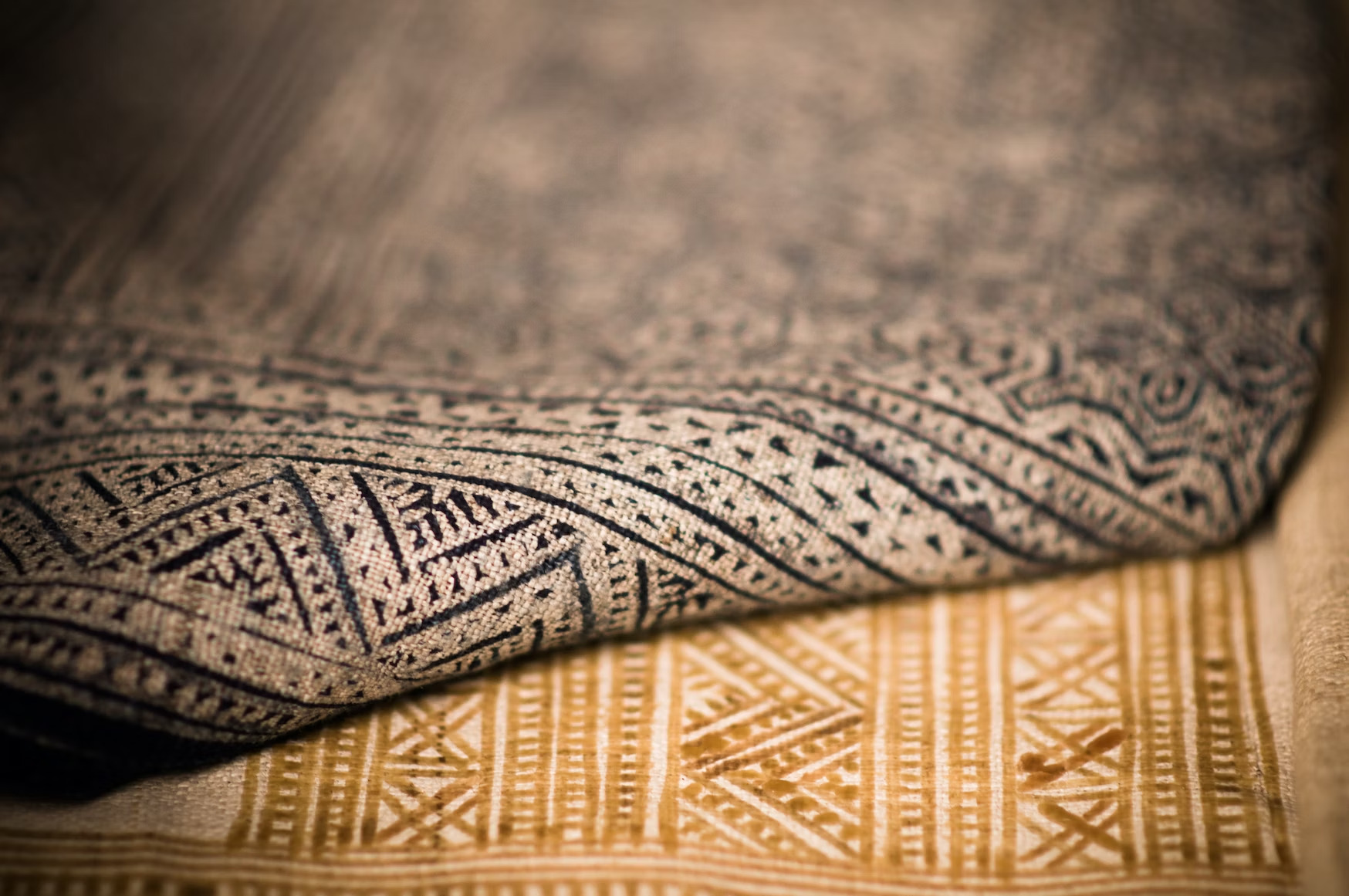
In wax-resist work, protected and exposed fibers develop contrasting colors during dyeing. A fabric printed with a batik-style motif may look similar from a distance, but that does not establish that wax was used to make it.
Understanding the batik making process helps when buying cloth. Ask how the design was produced. The pattern name, fiber content, maker, and care instructions provide different information; one does not replace the others.
The main stages of the batik making process
The broad sequence is preparation, wax application, coloring, further pattern work where needed, and wax removal. Exact recipes and the order of some finishing operations differ between workshops. A single universal temperature or timetable would be misleading.
1. Prepare the cloth and design
The cloth must be prepared for the intended dyes and wax. Makers may wash or otherwise treat it according to their process. They then plan the motif, including outlines, filled areas, and the colors that later stages must preserve.
Handwoven fabric can be part of a particular project, but it is not a requirement for all batik. Likewise, a repeated geometric motif does not tell you by itself whether the wax was drawn, stamped, or applied using a combination.
2. Apply the first wax barrier
For batik tulis, the maker draws with a canting. For batik cap, a patterned stamp places repeated wax impressions on the cloth. Control matters: gaps in a boundary can change where color travels, while excess wax can obscure a fine detail.
This wax barrier is central to the batik making process. The characteristic pattern comes from selective resistance during dyeing, rather than simply painting every visible line onto finished fabric.
3. Introduce color
Depending on the design, artisans may apply color locally with a brush or immerse the fabric in a dye bath. The dye, fiber, and desired effect determine the required processing and fixation steps. Natural dyes and synthetic dyes are both used in batik traditions and contemporary production.
An illustrative two-color design makes the logic easier to follow. Wax protects a pale flower shape while the surrounding fabric takes the first color. Later protection can preserve selected colored areas before another dye stage changes the exposed background.
4. Repeat where the design requires it
Additional wax and coloring stages build more complex patterns. Cracks in the wax can let fine lines of dye enter, producing a crackled effect. That effect may be intentional, but it is not a feature required in every piece.
The number of stages depends on the design. A two-color diagram can introduce the batik making process; it should not be presented as the complete recipe for a specialist workshop’s multi-stage cloth.
5. Remove wax and finish the textile
After the necessary coloring stages, makers remove the wax using their established process, often involving hot water. The cloth is then cleaned, dried, and finished appropriately. Wax removal reveals the relationships between the protected areas and dyed sections.
This is an explanation of the craft, not an unsupervised hot-wax tutorial. A practical workshop should provide controlled heating, appropriate dye handling, ventilation, and material-specific instructions. General workspace preparation appears in our beginner crafts guide.

A documented example: Monash Batik
Monash University’s project provides a concrete example of a collaborative production process. Its published account identifies the makers’ location, the techniques used, and the stages that connect a design with finished cloth.
What the project documents
The university states that Monash Batik involved over 200 artisans in Pekalongan. Its description covers woven cloth, hand-drawn or stamped wax, brush coloring, dye baths, and wax removal. That figure describes this initiative, not the size of the entire batik industry.
The example also shows why the batik making process needs context. A project can combine techniques and specialist roles rather than following one maker’s identical sequence from beginning to end.
How to describe and assess batik accurately
Use the production method when describing a piece, and keep cultural claims specific to the relevant tradition. A visually similar motif does not prove a particular origin, symbolic meaning, or level of handwork.
Questions worth asking about a textile
- Was wax applied by hand, by stamp, or with both techniques?
- Is the cloth wax-resist dyed or printed with a batik-style design?
- What fiber is it made from, and who produced it?
- What washing and storage instructions does the maker provide?
Our guide to Indian handicrafts uses the same method-first approach to regional crafts. Naming the place and process gives a more useful description than treating every handmade textile as interchangeable.
Keep cultural recognition in context
UNESCO inscribed Indonesian Batik on its Representative List in 2009. The listing concerns the techniques, symbolism, and culture surrounding the practice. It is not a certification of every fabric sold with the word batik on its label.
Understanding the batik making process also helps distinguish visual pattern from physical surface texture. In paper projects, scrapbooking texture techniques can imitate a fabric-like appearance, but that visual effect does not make the material batik.