Zettiology – What Kind of Art Is That?
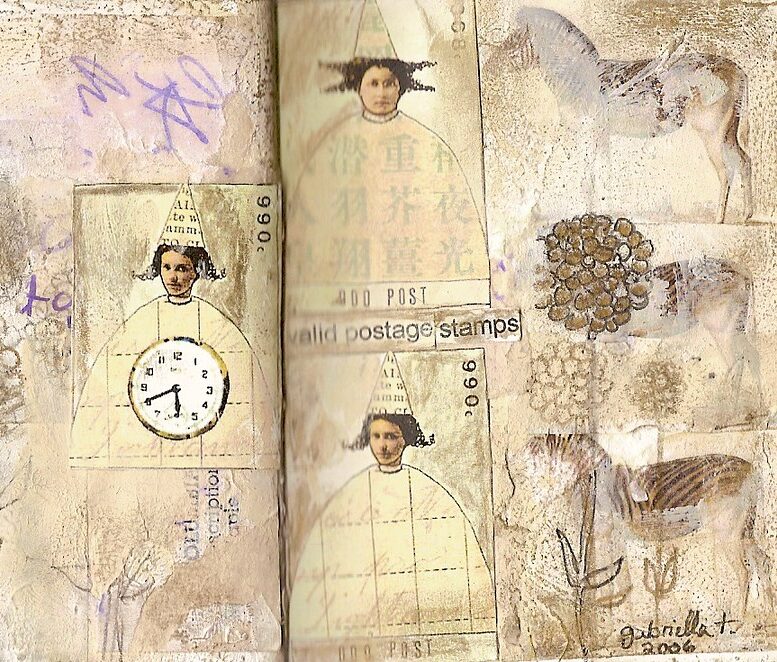
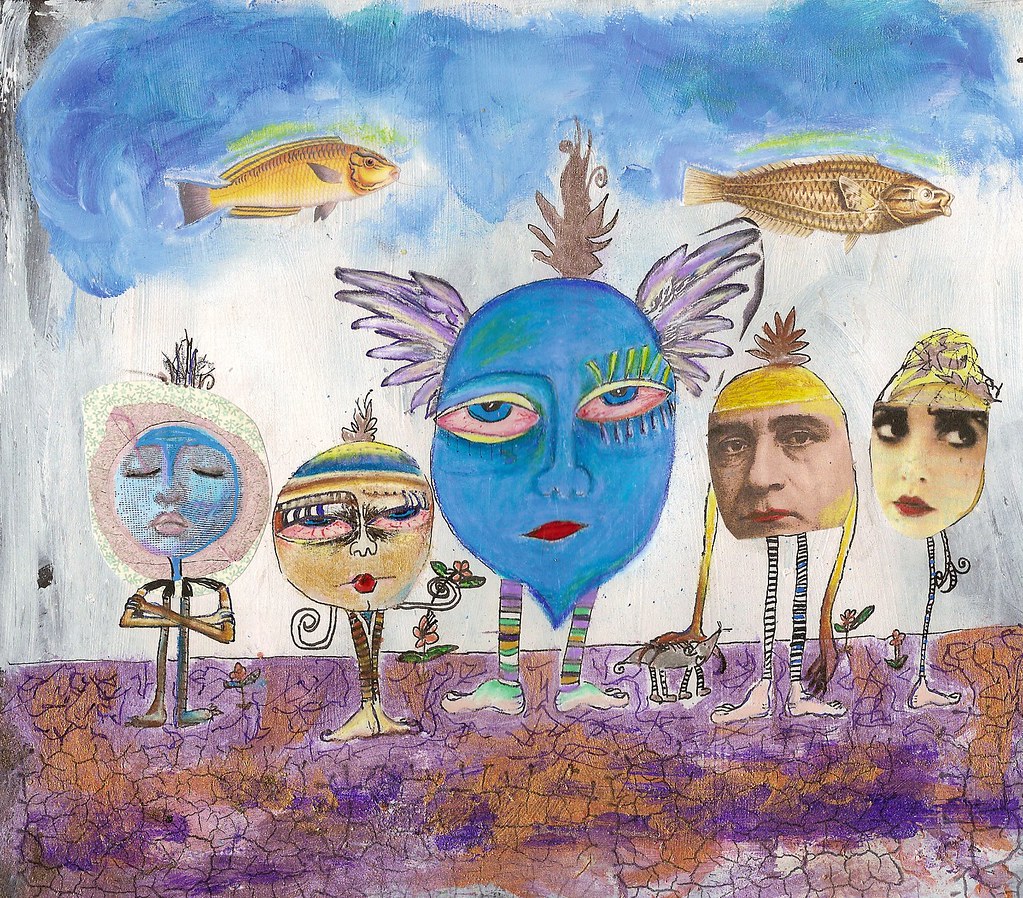
Zettiology describes a playful mixed-media approach associated with Teesha Moore: unexpected figures, contrasting patterns, strong outlines, and personal words share the page. You can explore its visual language with paper, glue, and pens. Drawing realistically is less important than making interesting relationships between the pieces.
What makes Zettiology recognizable?
Look for unlikely combinations rather than one mandatory symbol. An oversized face, patterned legs, or a handwritten sentence might connect separate scraps into a character. These are useful starting points, not rules that every work must follow.
Familiar objects in unfamiliar combinations
A bird might have a human face; a small body might support an enormous hat. Changing scale and context makes an ordinary image feel strange. The effect depends on the relationship between the parts, so adding more objects does not automatically improve a composition.
Keep one feature dominant. If the face is your focal point, use quieter shapes behind it. An uncluttered area can make an eccentric character easier to read without making the whole page restrained.
Pattern, handwriting, and contrast
Black-and-white stripes can interrupt a colorful background. Dots, outlines, and repeated marks can connect scraps that originally came from different places. Words add another layer when their meaning relates to the figure instead of functioning only as decoration.
The distinction between physical and visual scrapbooking texture is helpful here. A drawn crosshatch creates visual texture without making the page bulky; fabric or raised paper adds actual thickness.
Start with a small, workable materials kit
For a first Zettiology exercise, use a sturdy paper surface, a few image scraps, adhesive, and two drawing tools. Limiting supplies makes it easier to finish a coherent piece and identify which choices you want to change next time.
Choose papers and images deliberately
- A sheet of mixed-media paper or sturdy card.
- A glue stick suitable for the papers you chose.
- Scissors, a pencil, and a black pen.
- One opaque light-colored pen or a small amount of paint.
- Your own drawings or images you have permission to use.
- A few contrasting patterned scraps.
Test the pen on a glued scrap before drawing on the finished page. Some surfaces resist ink, and some inks smear when wet. The beginner crafts guide explains how a small sample and a prepared workspace can prevent avoidable material problems.
Keep image permissions separate from technique
Learning from an artist’s composition does not give you permission to reproduce their artwork. For a piece you plan to publish or sell, choose your own images or check the applicable license. A downloadable picture is not automatically available for commercial reuse.
Licensed digital stamps can provide figures or small details, but usage terms vary. Keep the creator’s name and license information with the file so you can check them again later.
A Zettiology exercise: make a character from three shapes
This original exercise uses one figure, a short sentence, and a limited palette. The aim is to make deliberate visual choices. It is an illustrative project, not a reconstruction of a particular artist’s work.
1. Build a background that leaves room
Choose a small page and apply one light background color, or start with colored card. Leave an open area for the face and another for lettering. If using wet paint, let the surface dry before arranging or gluing paper.
2. Arrange the character without glue
Combine a face, a body shape, and an unexpected third element: perhaps a leaf-shaped hat or two long paper boots. Move the parts until the silhouette is clear. Photograph the arrangement if you want a reference before lifting the pieces.
For this Zettiology exercise, change one relationship at a time. Making the hat larger is easier to judge when you have not simultaneously changed the background, face, and lettering.
3. Add a sentence with a purpose
Write an original line such as “I packed too many plans.” A towering stack of paper suitcases could reinforce its meaning. Try the lettering on scrap paper first, then leave enough space between words to keep the sentence readable.
4. Glue, outline, and edit
Attach the larger pieces first, then the smaller details. Add a few marks that repeat across the composition: the same dots on a hat and border, for example. Stop periodically and look at the page from a distance.
If everything competes for attention, cover one busy patch with plain paper. Zettiology can be visually dense, but each additional mark should help the character, the mood, or the text.
What documented examples can teach you
Published projects offer concrete ways to study this approach without inventing a formal rulebook. Compare how each maker combines images and words, then test a different composition using your own material.
A small-format example
PaperCraftCentral’s Zettiology project account describes an artist trading card challenge using the standard 2.5 × 3.5-inch format. The maker combined parts of two stamped figures, added watercolor pencil, and finished with handwritten text and white dots.
That example shows how much character can fit into a small area. The dimensions are a format convention, not a requirement for every Zettiology artwork; a journal page can be much larger.
Two approaches to experimentation
In Stampington’s 2013 interview, Teesha Moore emphasized experimentation and avoiding excessive attachment to a piece. That is useful process advice, rather than a promise that any particular technique produces good work.
Kerrymay’s 2020 Zetti collage project uses acrylic paint, magazine imagery, patterned paper, outlining, and lettering. Compare that materials-based approach with your three-shape exercise: the most useful question is which choices make your own character and sentence work together.