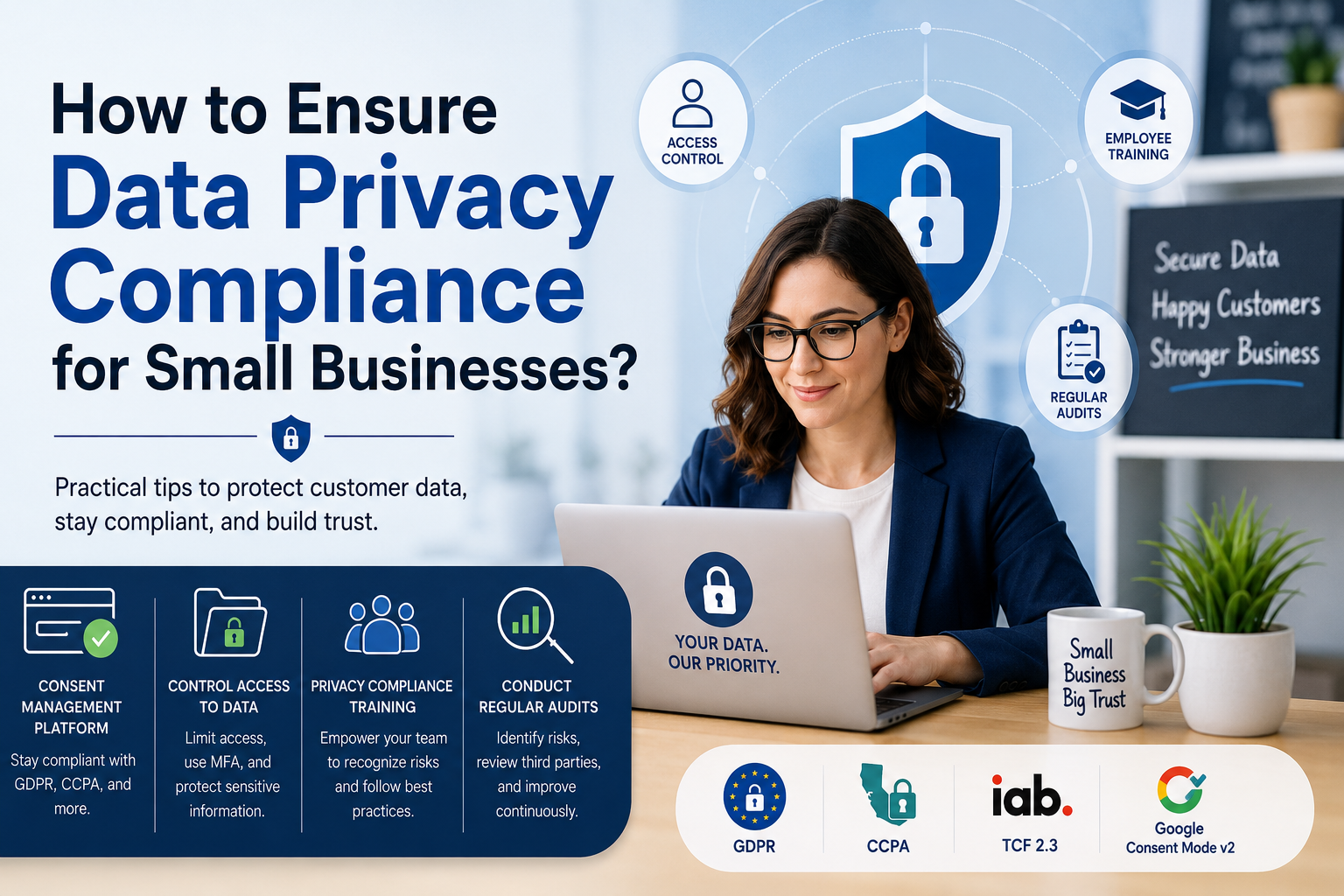
4 Data Privacy Compliance Tips for Small Businesses
How to Ensure Data Privacy Compliance for Small Businesses?
As a small business owner, you might think data privacy is only a large-enterprise concern, but you are wrong. Even 80% of consumers worry about data privacy, greatly impacting their decision-making. So, what are the data privacy compliance tips that you can follow? How can you protect customer data and win their trust? Let’s find out!
4 Data Privacy Compliance Tips for Small Businesses
Do you know that small businesses experienced a 49% cyberattack rate in 2026, with incidents occurring every 7 seconds? To avoid it, you should follow data privacy compliance tips such as giving controlled access and implementing privacy compliance training. Here’s a detailed overview of these:
Use a Consent Management Platform
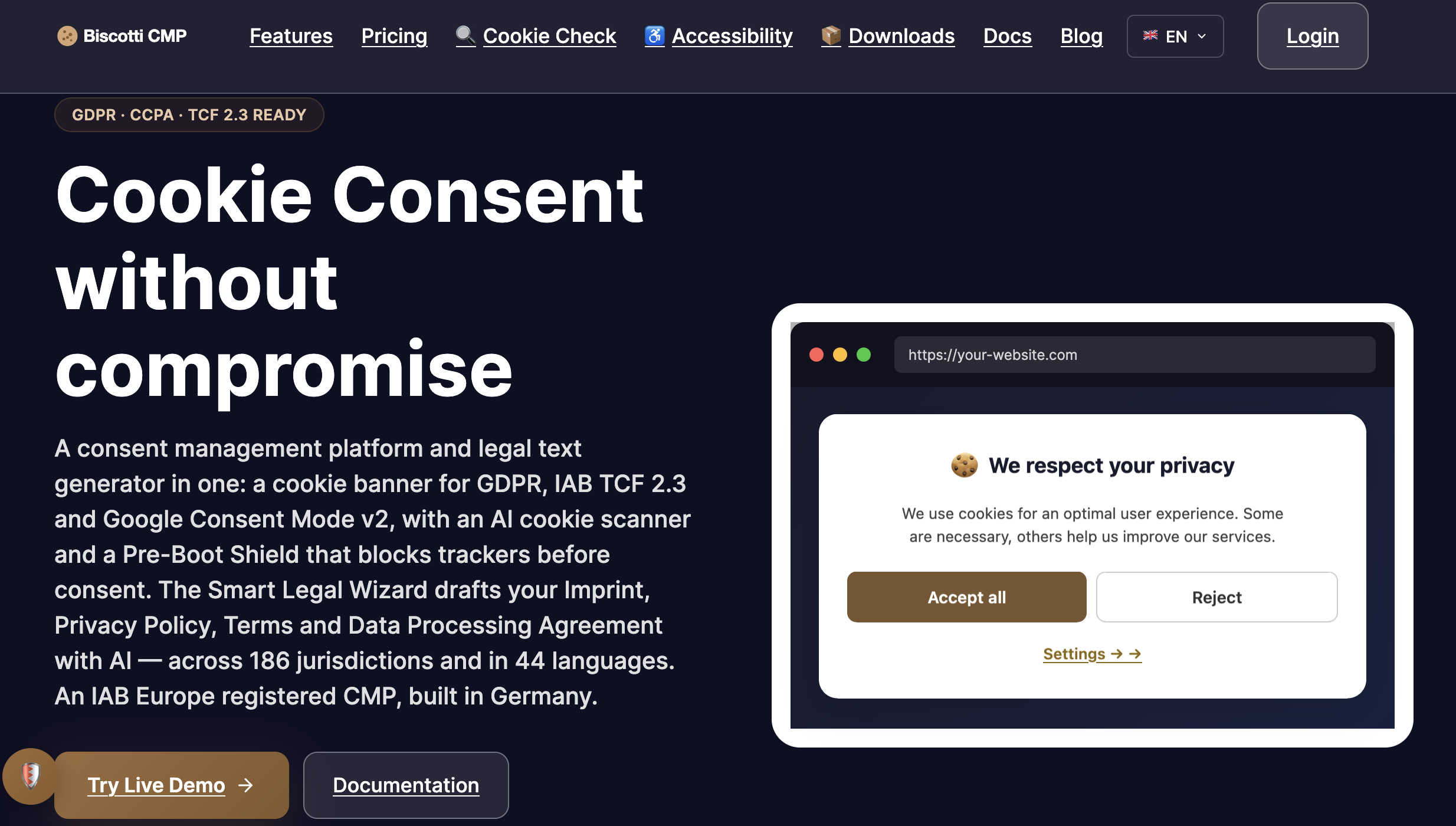
For your business website, you must use a consent management platform like Biscotti CMP. It helps you comply with privacy laws, including GDPR, CCPA, IAB TCF 2.3, and Google Consent Mode v2. You can use it to display cookie consent banners and block tracking scripts until visitors give consent.
This platform supports 186 jurisdictions and 44 languages, along with AI text generation. Setting it up is a breeze with its WordPress plugin and simple integration methods. When you use it, you make your customers feel that their privacy is respected, which leads to greater trust in your offerings.
Control Access to Business Data
While running a business, you should know that you can’t give every employee access to customer or vendor data. For that, assign permissions based on an employee’s particular job function. For instance, a marketing employee shouldn’t have access to financial ledgers.
In addition, implement multi-factor authentication for all critical company logins to prevent unauthorized access. You can also sign confidentiality agreements that clearly outline all data privacy and security guidelines.
Implement Privacy Compliance Training
You should provide privacy compliance and cybersecurity training to employees so they understand their responsibilities when collecting, accessing, storing, and disposing of sensitive information.
This also helps them identify potential threats and respond to data breaches promptly, saving resources. IBM reports that the average breach cost for organizations with fewer than 500 employees reached $3.31 million.
Let’s look at a few things your employee training should cover:
- Overview of the general laws and regulations that govern the handling of personal data, including GDPR or CCPA 2.0.
- Types of data that need to be collected and handled by the organization.
- Measures your security organization takes to protect personal and organizational data.
- Procedures and protocols that the employees have to follow in the event of a data security incident.
You can conduct these sessions either in person or online to keep everyone informed and proactive.
Conduct Regular Audits
Don’t wait for a data breach to occur; instead, conduct regular privacy compliance audits to identify potential risks. Start by identifying the scope of the audit and then assemble the right team. It will comprise members from the legal, IT, and security teams. Clearly communicate to relevant stakeholders regarding the audit and what’s expected of them.
If you have third-party memberships or agreements, thoroughly review them to ensure they comply with your company’s privacy policies. Once the audit is complete, create a detailed report that highlights areas of vulnerability and practical solutions to address them. This way, you can position your business as credible and stay ahead of competitors.
Other data privacy compliance tips for small businesses include using technology to protect against data theft and honoring customers’ rights.
Conclusion
Before you implement data privacy compliance tips for small businesses, you must understand the GDPR, the CCPA, state privacy laws, and industry regulations such as HIPAA and FERPA. If manual compliance seems a hassle, use a consent management platform like Biscotti CMP to build user trust and encourage engagement.